World Without End
Earth Day Sermon — Psalm 23
Our Scripture today is Bobby McFerrin’s version of “The 23rd Psalm.” This setting was written by Bobby in honor of his mother, so he refers to God as she. Dave Worm — who will be wish us for worship two weeks from now with Ann Speyer — is singing the tenor part with Bobby McFerrin.
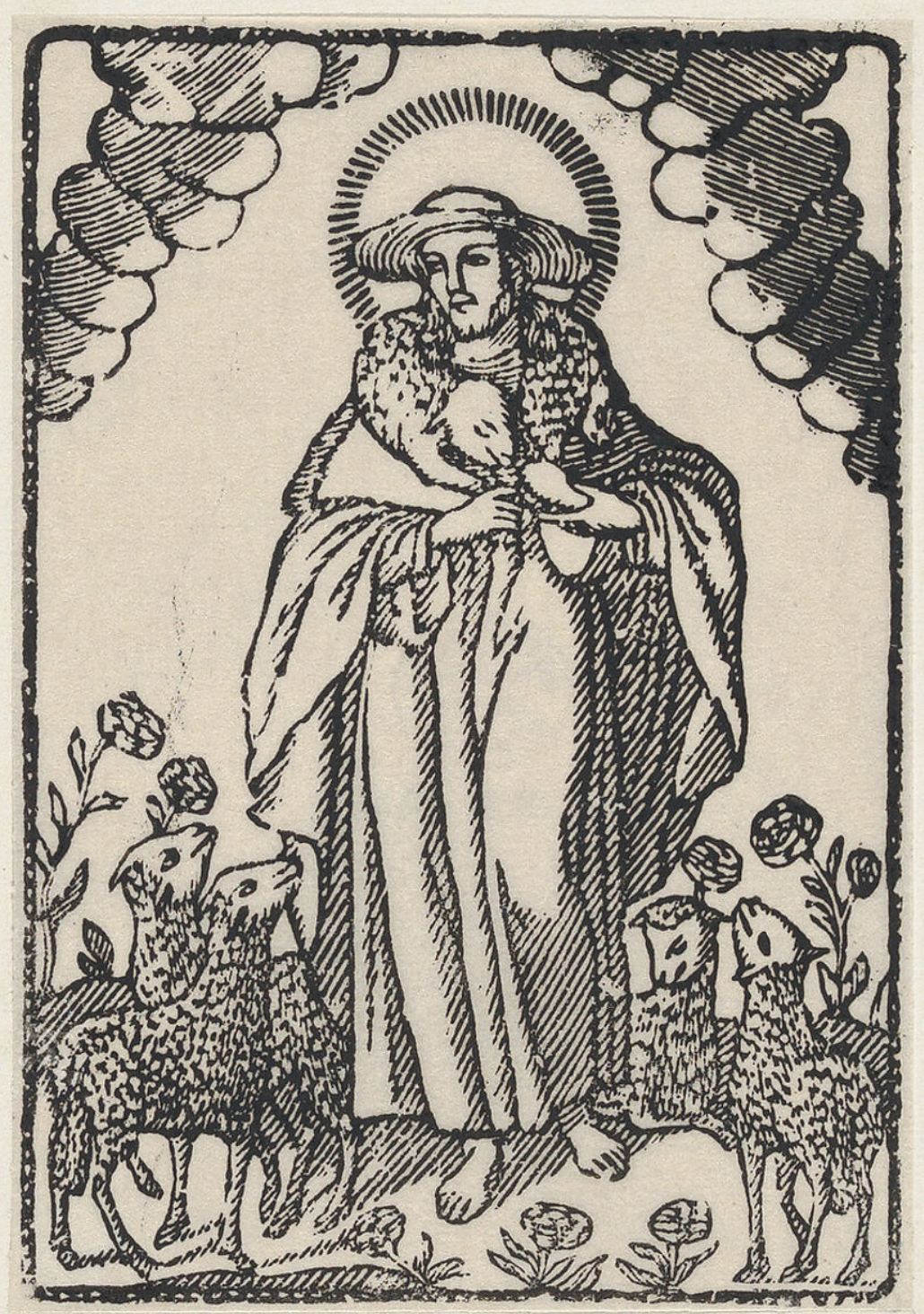
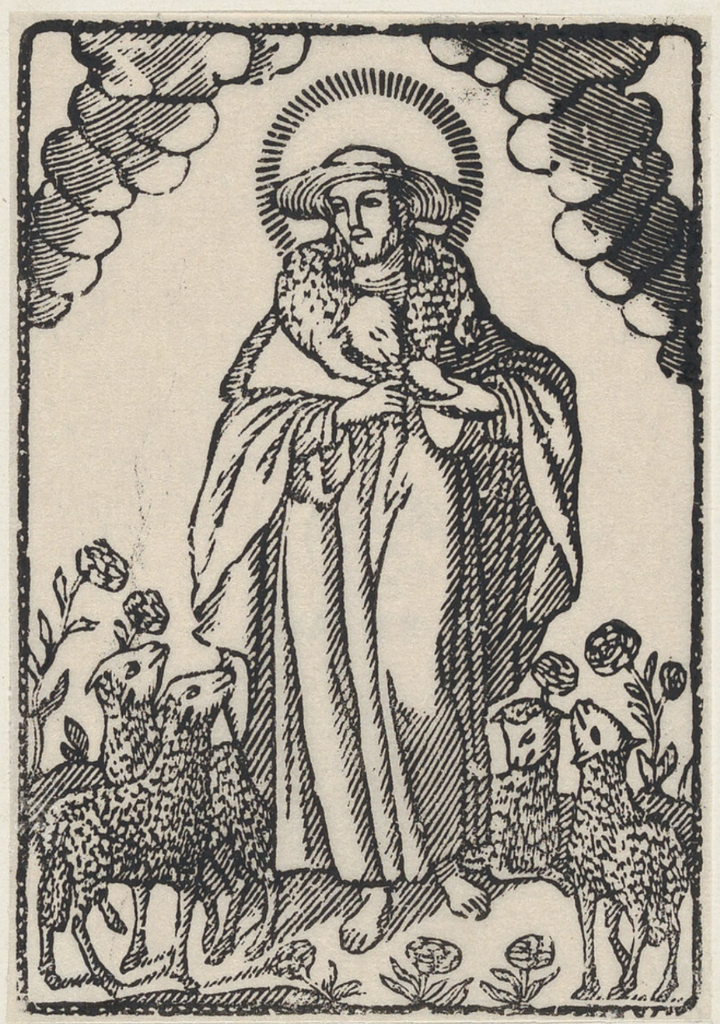
This week I sat with some of you in lectio divina, reading over these ancient words — words many of us can probably can recite by heart. In lectio, we read the passage slowly, several times. And somewhere in the reading, I stopped being an observer of the psalm and became… a sheep.
I felt myself eating succulent green grass, so delicious and cool. I knew that when I was thirsty, I would be led to clear clean waters that would slake my thirst. I loved the feeling of lying down in that cushion of grass, knowing I was protected. Here I was, in a green meadow in the big outdoors, and I am a fat, round succulent creature. But I know that I’m safe from predators that would seek to slurp me up.
And then I felt myself walking through a dark valley. Suddenly, a warm sunny day became cold and dim. A blustery wind whipped through that valley. I could feel how dangerous it was, with only one entrance and exit, only one way out, should predators attack. But the Good Shepherd was with me, and I knew we would make it through.
And then another truth arrived alongside it: I could have been born a child in Gaza. I stand here, nourished, restored, my cup overflowing — and there are children right now, today, for whom the valley of the shadow of death is not a poetic image but the place where they live.
I can’t resolve that tension — between the reality of abundance and protection on the one hand and the reality of suffering and contingency on the other. It is the cross on which we find ourselves. I don’t think this tension of opposites can be resolved. But I do think it can be held — the way the psalm itself holds both the green meadows and the dark valley, without pretending one cancels the other out.
So I want to stay inside this psalm a little longer, sticking with this tension inherent within it.
I want to begin by speaking to those of you for whom the green meadows feel very far away right now.
Some of you might be in winter. Not the season outside—where spring is breaking out all over—but the interior kind. The kind where the world feels like a cold valley that does not know your name, does not register your suffering, does not care whether you make it through the night. That experience is real. I was talking to my sister-in-law about these kinds of experiences when I was home, and she surprised me by saying: I feel like that a lot of the time. I had no idea; she appears to be a very “pious,” fairly upbeat person. I think we often don’t know if people feel this way.
But the psalm knows this valley. It doesn’t skip past it; it doesn’t go around it; walks straight into it: “Even though I walk through the darkest valley. If that is where you are, I don’t think you are outside the psalm. You are inside it. The dark valley is part of the experience, too.
But I also want to say this clearly: When green pastures seem absent from a human life, it is rarely an accident of nature. The child in Gaza did not just happen. That child is living in the valley of the shadow of death because human beings have constructed systems—political, economic, military—that operate according to a logic opposite to the earth’s own. Where creation gives freely, these systems hoard. Where creation cycles and returns, these systems extract and exhaust. Where creation draws no line between whose life counts and whose does not, these systems decide, generation after generation, who is expendable.
You might say, Sheri, what about prey and predators? Yes, there are prey and predators, but the predators live and work within the systems of life: taking just what they need for today. Their predation keeps the system in balance, thinning herds. There’s a reason prey produce bountiful offspring, while predators do not. Prey and predator alike live within a system that provides food and water, shelter, ensuring the system is whole and continues generation to generation. It’s humans, trying to live outside of this system of life, that seek to to dominate, extract, suppress, control, conquer. (This is paraphrased from Sarah Augustine’s and my book.)
The psalm is not naïve about this. The table is set in the presence of enemies. There are enemies. The valley has a shadow because something is casting it. The green pastures and abundance of life are not absent from the child in Gaza; they are being suppressed—by the structures we have built or failed to dismantle, by the ancient lie that some lives are worth more than others.
That is not a theological mystery. It is a moral emergency.
And yet that suffering does not cancel out, for me, the presence of the animating life-force that runs through this psalm and all creation—what the medieval mystic Hildegard of Bingen called viriditas, the greening power. She believed it is never absent, even in the deepest winter. It goes underground. It goes quiet. It becomes invisible. But it is there, beneath the frozen ground—as present in January as in May. The tree that looks dead is not dead. It is dormant. Those are not the same thing.
My colleague and dear friend Sarah—many of you know her, know the work we have done together in the Coalition to Dismantle the Doctrine of Discovery—she has taught me to read scripture through what she has learned from Indigenous elders. She often points to Romans 1, where Paul says that no one can claim they don’t know God’s will because (and here I’m quoting scripture) “what may be known about God is plain to them, because God has made it plain to them. For since the creation of the world God’s invisible qualities — God’s eternal power and divine nature — have been clearly seen, being understood from what has been made.”
In other words, God’s nature is not known primarily in doctrine or in words on a page, but in creation itself.
Paul — and Indigenous elders — are not saying that creation is a good gift from God to humanity, now let’s move on to more important theological topics. The Celtic Christian tradition speaks of two books through which God is revealed: the First Book is creation itself, and the Second Book is scripture. For many of us in the Western church, the Second Book has so dominated our attention that we’ve nearly forgotten how to read the First. But for many Indigenous peoples, the First Book has always been primary — creation holds the entire story of the Creator. For many Indigenous peoples, you don’t need faith — you don’t need to make a wager that the Creator exists and is good; you can open your eyes and see, you can look too creation and what it teaches.
So what does creation teach us about the Creator?
Every spring, life returns. Not because we deserve it. Not because we have earned it. But because that is what life does—it returns. Seeds that looked dead all winter split open in the dark and push upward toward light they cannot yet see.
Every morning, the sun rises again. The great cycles of pollination, of water, of seasons, of soil—microorganisms we don’t fully understand doing their patient work so that we have air to breathe and ground to stand on and food to grow. We do nothing to earn these things. What grace, says Sarah. What grace.
This is not a tame or sentimental greenness. The same earth that carpets the meadows also shakes and floods and devours. The viriditas is not a promise of safety. It is something wilder than that. The same tectonic forces that produce earthquakes and tsunamis also built the continents, generated mineral-rich soils, and created the conditions that made life possible. You cannot have one without the other, at least not in this world.
This is not a cosmos designed for human comfort. It is something more extravagant: a commitment to life at every scale, across all time—a commitment that does not exempt any of us from suffering, but holds that suffering within a larger frame.
This is why I so often refer to God as the Spirit of Life, why the phrase “eternal life” speaks to me — not as a place we go when we die, but as the matrix of life in which we already live and move and have our being—a life that will never end, even when ours does. We participate in this eternal life. It animates us. It flows through us. And it follows the logic of the overflowing cup: water that doesn’t just fill but spills, that wastes itself in generosity, that asks nothing in return for what it gives.
And here is what moves me most, especially on this Earth Day, especially in this moment when so much feels like the dark valley, where we face the possibility that we humans are irrevocably damaging the ability to sustain abundant life: The earth has been through extinctions before—not small disruptions, catastrophic ones. And life returned. Not the same life. Not immediately. In geological time, not human time. But the logic of life—the drive toward complexity, connection, and fertility—reasserted itself.
And always, always, no matter what we are doing her eon earth, the universe moves on, expanding at approximately 70 kilometers per megaparsec, whatever that means, The images coming back from the great telescopes are staggering: galaxy after galaxy, star nursery after star nursery, birthing new worlds. The universe seems to be in the business of life. It careens toward it. cannot seem to stop.
I am part of this. You are part of this. It flows through us. As one of our sages has sung: “We are stardust, million-year-old carbon.”
Our small lives—and they are small, in cosmic terms—matter. Our suffering matters. The suffering of the child in Gaza and of my sister-in-law matters. I am not asking you to dissolve your grief into the cosmos and call it peace.
But there is something moving through us that is larger than us—that viriditas, that greening power, that star power from which we are made. It will outlast us by spans of time we cannot imagine.
I am not primarily Sheri. I am a particular, temporary, and—I believe—beloved expression of that greening power, that star power. So are you. So is the child in Gaza. So is the microorganism doing its silent work in the soil beneath your feet. So is the sheep eating the grass grown from that soil. The Shepherd’s flock is larger than we imagined.
The valley is real. The shadow is real. The winter is real. And the table is being prepared in the middle of it—not after it, not instead of it, but in the presence of our enemies, in the presence of our grief, in the presence of our despair.
Whether you can feel the green meadows today or not—whether you are in spring or in the depths of winter—the greening power is present. It was present before the first word of this psalm was written. It will be present long after the last of us has returned to the soil.
Bobby McFerrin’s version of our psalm ends with an ancient doxology, which I love: As it was in the beginning, is now, and ever shall be, world without end.
The greening power is not new. It burst forth at the beginning, preceding the first human footfall on this earth by billions of years. It will outlast our worst mistakes by billions more. The Creator who makes the meadows green, who turns the seasons, who drives the cosmos toward life relentlessly, extravagantly, unstoppably—
She has always been here. She is here now. She will be here forever.
Surely goodness and kindness will follow us, all the days of our life.
World without end.
Amen.