
Sermon: Transformation in Community
Matthew 9:9-13
This past Thursday I was out in the streets of San Francisco… for a big dance party! Ann, Del and I went together, motivated by the fact that one of our favorite musical artists, Janelle Monae, was going to spin a DJ set. A couple days before the event we found out that she would not be there afterall, but we were still game. What transpired was one of the most fun and joyful evenings I’ve had in awhile.
The party was downtown on a number of blocks that were closed to traffic. There were people of all ages and racial identities – kids to elders. There were rainbow clad dancers on bouncy stilts, drag queens, DJs at four different stages, karaoke, DIY crafts and screen printing. Some folks were sporting their comfy clothes and others were decked out for the club. We got our dinner from a falafel truck displaying many Free Palestine stickers, and I noticed Scott Wiener walking by, but couldn’t think quickly enough of a zinger question to ask him.
The dancing was the best part as people across all these demographics smiled and laughed and boogied down together. Elders and young people were cheering on each other’s moves and the vibe was so fun.
As we know the Bay Area has many problems and inequalities, and often I am spending time organizing to address those things along with many of you. And it is also a gift to be reminded of the kindness and vibrancy and creativity that exists when diverse groups of people get together and celebrate life. Truly we do the work of addressing systemic violence with the goal of all people having the freedom to dance in the street if that’s what they want to do.
I hope for each of us as we enter into the summer season, that we have moments and experiences that refresh our spirits and enliven our souls. There is so much to be grateful for living in this beautiful place filled with diversity of all kinds. The healthiest ecosystems are the most diverse after all.
But, you might be wondering, what does this have to do with our scripture for today? In broad strokes it connects with the inclusivity of Jesus’ table fellowship and the healing that’s found in community. I’m not saying that a downtown SF street party is the kingdom of God but in a world where leaders are hell bent on turning people against each other, controlling queer and female bodies, and glorifying war and genocide, this celebration on the streets of SF felt like an act of joyful resistance.
Throughout the gospels Jesus is chastised many times for the diversity of his movement. He honored women and hung out with sinners, gluttons (read party animals) and undesirable folks, like tax collectors. According to the hierarchies and social segregation of the time, it was totally abnormal for this collection of folks to eat meals together. But they all had one thing in common, they had chosen to follow this country rabbi, Jesus/Yeshua, who was teaching a new/old way of being rooted in the prophetic tradition.
For Matthew the choice to follow Jesus meant giving up his exploitative job. It cost him literal money but it restored him to belonging in the community. Tax collectors were societal outcasts because they were collaborators with the Roman occupation. They were known to overcharge taxes in order to line their own pockets.
For all we know, Matthew could have been honestly fed up with his role as a tax collector. Perhaps he longed for connection with others and hated the way the Roman occupation set him against his own people. So when Jesus came along, he was ready – in this story he doesn’t need any convincing. He just got up and followed Jesus. It seems plausible he knew something was deeply wrong with his situation and Jesus helped him get out of it.
The religious leaders were not happy about this because it messed with their categories of who was accepted and who was rejected. They had the system all worked out and then Jesus came along and started including people who were supposed to be excluded. “What is his deal?” they said. And Jesus had a response rooted in the scriptures. He wasn’t doing a new thing he pointed out to them.
He quoted the prophet Hosea when he said, “I desire mercy, not sacrifice.” In his day Hosea was fed up with those who practiced religious ritual with one hand while violating and exploiting the vulnerable with the other hand. The rituals were meaningless, he cried out, when disconnected from faithful and ethical living. The prophet Micah echoes the same thing – what does the lord require? To do justice, love mercy and walk humbly with your God.
As we learned last year in our narrative lectionary series, the prophets always showed up to remind the people of God’s original instructions – to be a blessing to all the families of the earth. The religious rituals were given to the people after their liberation from slavery in Egypt. The rituals were given to help them decolonize themselves and become a people who lived in right relationship with each other and with God. The rituals were a symbol to remind them of these commitments – they were never sufficient in and of themselves.
So Jesus was reminding the religious leaders in his day of this prophetic truth. If you are using your religious rituals – your worship – to exclude people and harm the vulnerable, then your worship is meaningless. Obviously these are potent words for religious leaders today, who claim Christianity justifies their nationalism and zionism. Clearly these ideologies are antithetical to the original instructions which renders them unequivocally false.
Then, going back to today’s scripture, Jesus ends his response to the religious leaders with the zinger: “I have not come to call the righteous but sinners,” which I would adapt to say: I have not come to call the self-righteous but the sinners.
Matthew (the tax collector) knew that something was wrong with his situation and repented. The people in Jesus’ movement knew and felt that the status quo was not working – it was literally making them sick (hard labor, poor nutrition because the best food was going to the occupiers) and isolating the vulnerable from community support.
Jesus was basically saying, “if you think this reality we’re living in is just fine, then I really cannot help you.” Jesus was creating a community and a movement of people who knew they needed healing collectively. And the stories of healing are ultimately about restoring outcast people to community. Healing is inextricably linked to community.
I imagine for all of us in some way community (at its best) has been a source of healing and transformation. And that doesn’t mean it is easy – just as I’m sure it wasn’t easy for the followers of Jesus. They were coming from different social classes and ethnic identities and religious experience. They were a diverse bunch who didn’t even all speak the same language. But that was also a part of the healing – to learn to relate across differences, to see each other as family – to break down the hierarchies that they had internalized.
The story of Pentecost in Acts 2, where people understood each other across language and cultural differences, is one example of this. That same chapter of Acts ends with the description of the community they were becoming…
42 The believers devoted themselves to the apostles’ teaching, to the community, to their shared meals, and to their prayers. 43 A sense of awe came over everyone. God performed many wonders and signs through the apostles. 44 All the believers were united and shared everything. 45 They would sell pieces of property and possessions and distribute the proceeds to everyone who needed them. 46 Every day, they met together in the temple and ate in their homes. They shared food with gladness and simplicity. 47 They praised God and demonstrated God’s goodness to everyone.
This sounds like a joyful community to me! Our transformation, healing, and joy come from our commitment to be disciples on the journey together! It takes a village to follow Jesus! Among Christian groups, Anabaptist are pretty clear that our discipleship is made real in community. It’s not actually possible to be an individual Christian.
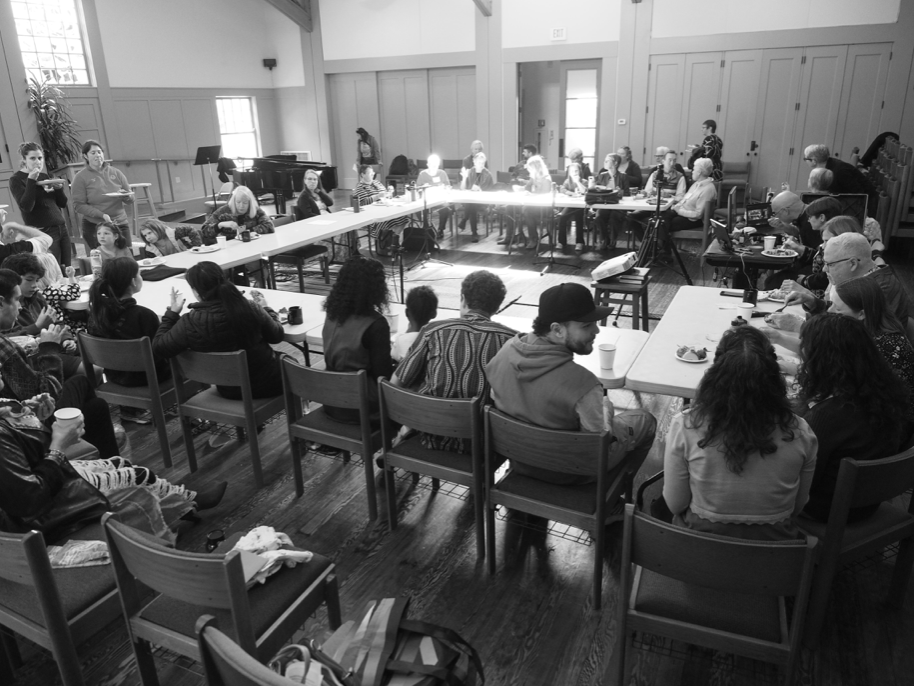
We bear each other’s burdens, we pray for each other, we have hard conversations sometimes, but that’s not all! In community we also celebrate together – we celebrate healing, we celebrate courage, we celebrate across language and culture. We sing, we laugh, we share meals, and yes, we have even been known to have dance parties in this very space!
May we continue to be a community of healing, transformation, and joy! May we celebrate the diversity of who we are and learn from each other across our differences. May our love for each other be an act of resistance to all that seeks to divide us. And may our love for each other bear witness to the hope we have for our world. Amen.