Sermon: The Coin in Our Hands
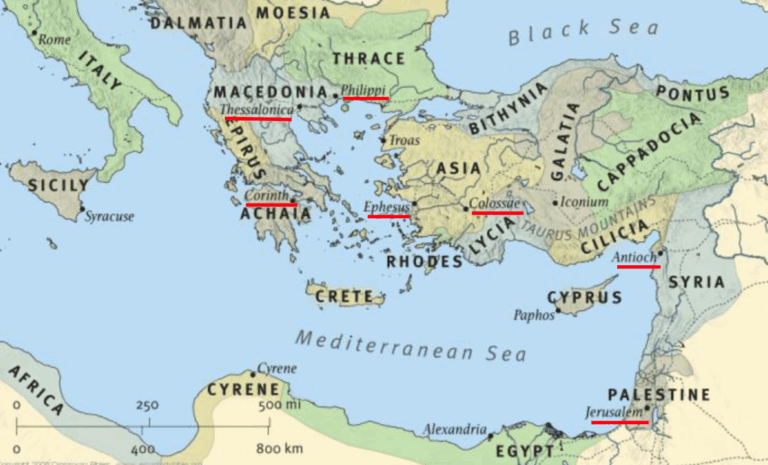
Matthew 22:15–22
Kind of like Democrats and Republicans today, the Pharisees and the supporters of Herod agree on almost nothing, except they both agree Jesus, who doesn’t belong to either of their camps, is a problem. The Herodians support the royal family that rules at Rome’s pleasure. The Pharisees deeply resent Rome’s rule. In our story, these two groups come together to try to take down Jesus.
They begin to set their trap with flattery. “Teacher, we know that you are sincere. You teach the way of God. You don’t say just what people want to hear, but what you know to be true.” Every word of this is true, which is what makes it so slippery. This “softening up” is, of course, a common rhetorical strategy then as well as now. You get your opponent’s guard down, and then you turn the screw with a question intended to trap them. Their zinger question is: “Is it lawful to pay taxes to Caesar, or not?”
The word Matthew uses for what they’re doing, to entrap, comes from hunting. It is the word for a snare. And this snare — I think of it as a bear trap — has two jaws, both of which will cause Jesus harm. If he says yes, pay the tax, he sides with the empire that occupies his land, and the crowds who are following him will turn away in disgust and disappointment. If he says no, don’t pay, he is an insurrectionist, and Rome knows exactly what to do with insurrectionists.
So: Yes or no, Jesus. Collaborator or rebel: Which will it be? There’s no third way, right?
Before we watch Jesus find that third way, I want to pause and talk just a bit about the Pharisees. For much of Christian history, Christians have used passages like this one to do harm to Jewish people by equating them with the Pharisees. “Pharisee” has become a byword for a hypocrite, for someone who follows divine law in a rigid, legalistic way. They become the foil for us Christians, who supposedly live by grace instead. But that’s a caricature. For Jews, then and now, Torah is itself a gift of God’s grace. Unfortunately, Matthew’s gospel seems to lend itself to this nasty caricature. The Pharisees are frequently depicted as deceptive, trying to entrap Jesus by making him contradict Jewish law, etc.
Most scholars believe Matthew was written some fifty years after Jesus’ death, after Rome had crushed the Jewish revolt and burned the Temple to the ground. In the aftermath of that devastation, different Jewish movements were trying to answer the same question: How do we stay faithful to God now that the Temple is gone? Several groups were wrestling with that question, including the followers of Jesus and the Pharisees, the heirs of which would become rabbinic Judaism, the form of Judaism that exists to this day. They are, in fact, the only two groups that endure from that time period. They were competing for the same people, in a time when everything was up for grabs.
In other words, this is a family fight. And we Mennonites know something about family fights. We have rarely saved our sharpest words for the Catholics or the Lutherans. We save them for the congregation down the road that splits off from ours, for the people within our own denomination who don’t hold the same beliefs as us. The closer the kinship, the hotter the argument, a truism in families or political parties or religious groups.
So when Matthew excoriates the Pharisees, we are overhearing a family debating a question that had been going on for generations: Was it faithful to pay tax to a pagan ruler? Jesus is not an outsider critiquing Judaism here. He is a Jewish teacher taking part in a long-standing Jewish argument. Israel had long been occupied by a successive waves of empires, so this question has been debated for centuries. The particular tax being referred to here is a “head tax” that came into being in 6 CE in Judea, when it came under direct Roman rule. Every inhabitant from age 12 to 65 was required to pay this tax using a silver denarius, which was equal to about one days’ wages. Many Jews hated this tax — paying tribute to Rome and accepting human masters meant denying that God alone was Israel’s ruler. Judas the Galilean was one of the people opposing this tax; the high priest, however, persuaded most Jews to comply. That proved to be a good survival strategy, as Judas the Galilean was killed and his followers scattered.
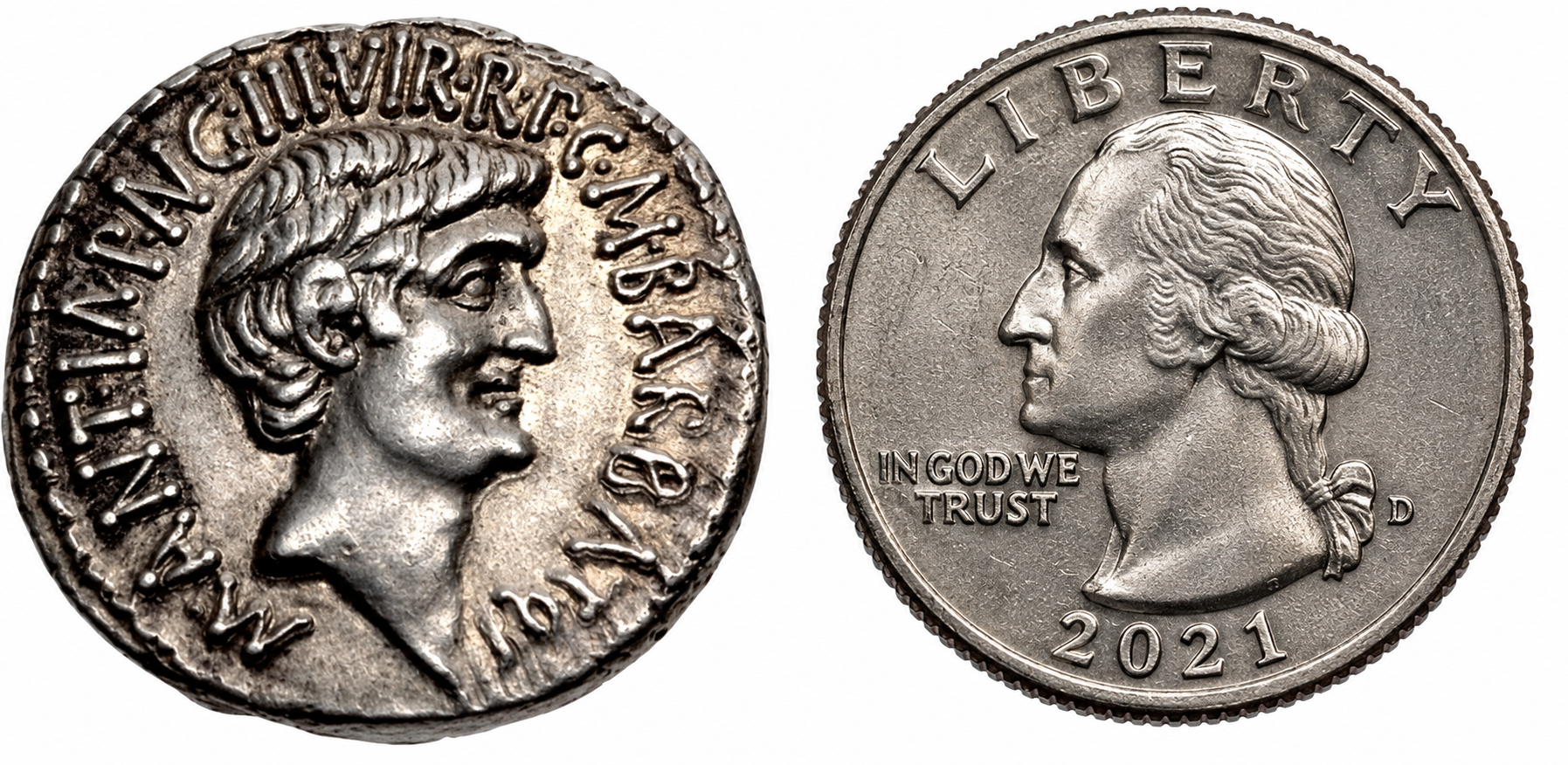
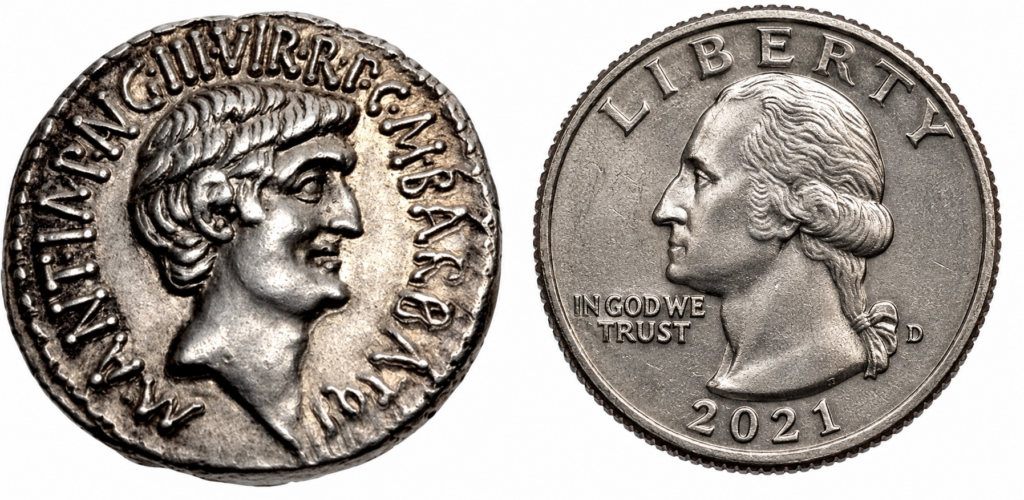
So back to the story. Jesus doesn’t answer yes or no to the question meant to entrap him. Instead he says, “Show me the coin used for the tax.” It seems like Jesus doesn’t have a denarius, or he would have brought it out. But his entrappers do. Now, one side of this coin shows the face of the emperor Tiberius, and around it is an inscription honoring him as the son of the divine Augustus. In other words, this coin carried exactly what the Ten Commandments forbade: a graven image, and a claim that someone other than Israel’s God is divine. Many devout Jews would have found it offensive. And it comes out of the pockets of the very people trying to trap Jesus, right there in the Temple.
Jesus doesn’t have to say another word for the point to land: Nobody in this conversation has clean hands. The Pharisees, who resented Rome, have its money in their purses. The Herodians, who worked with Rome, certainly do. Everyone is trading in Caesar’s economy, some because they’ve chosen to and most because they have no other choice.
Kind of like us, right? If Jesus turned to us this morning and said, “Show me the coin,” most of us could turn to our retirement accounts, invested in companies we’ve perhaps never examined too closely. Or the taxes withheld from our paychecks, which pay for things we value like health care and things that break our hearts like war and immigrant detention centers. Like the Pharisees and Herodians, we also hold the coin of complicity — a complicity we really can’t avoid.
Then Jesus asks, “Whose head is this, and whose title?” And he basically says: If you believe Caesar is owed the tax, pay it. If you believe everything belongs to God, well, then you have some thinking to do.
In other words, Jesus doesn’t settle the question. He hands it back to us. Like every great teacher, he doesn’t provide the ready answer but asks the right question instead.
The story ends: “When they heard this, they were amazed, and they left him and went away.” The Pharisees and Herodians took a timeout, in other words, probably to regroup and figure out how to attack him again. But there’s no timeout for us. The question has been handed to us, and we have to answer it.
But how? It doesn’t help that scripture and tradition don’t give a single answer.
In Romans 13, Paul tells the church in Rome to be subject to the governing authorities, because they are God’s servants for good. But in Revelation 13, written a generation later, that very same Rome has become a beast rising out of the sea, demanding worship, making war on the saints. Both of these are in our Bible. The mainstream church has, for the most part, adopted the stance of Romans 13. But there have always been currents in Christianity that have not had such a sanguine view of the state, and Anabaptists, of course, are one of them.
The Believers Church Bible Commentary suggests that the difference between these two views isn’t so much in the text itself, it’s in what the state is doing. Where a government’s policies contribute to peace and justice, reflecting God’s own purposes, supporting it is right and good. But where its policies protect the powerful, crush the weak, and threaten life itself, then we must, selectively, say no to the state in order to say yes to God. Our Anabaptist ancestors knew this in their bones. They refused the sword, refused the oath, and paid for it with their lives.
But this is actually quite a bit harder than it sounds. Almost no government is simply just or simply unjust. Our own federal budget funds schools and bombs, food assistance and detention centers, sometimes in the same bill. This ambiguity came up when we were debating whether or not to participate in war tax resistance — the taxes we are withholding fund things we also value, like paved roads and renewable energy.
So the faithful answer isn’t a one-time verdict that sorts the world into good governments and bad ones. It’s ongoing discernment. That’s exactly what Jesus’ non-answer requires of us. He doesn’t give us a rule. He gives us a question we have to keep asking and answering again and again and again. Give to the government what is the government’s, and give to God what is God’s.
There’s one more layer, and the commentaries mostly skip it, so I really appreciated when scripture scholar Raj Nadella at the Working Preacher website lifted it up. Jesus is speaking to a colonized people. For a Galilean farmer, refusing the tax wasn’t a matter of conscience that might have the consequence of receiving a stern letter from the IRS or the garnishing of wages. It was potentially a matter of losing your life and your land. Nadella says that for people living under violent regimes, the choices are never as clean as pay or refuse, capitulate or resist. Resisting an empire takes negotiation, tact, and imagination.
In fact, Jesus’ answer is itself an example of how the vulnerable speak. I once heard a man from Northern Ireland refer to this as “half-speech.” It’s the way colonized people talk when power is listening. There was a saying in Northern Ireland during the Troubles, “Whatever you say, say nothing.” In other words, speak so that your own people hear everything and the authorities hear nothing they can use. To a Roman ear, “give to Caesar what is Caesar’s” sounds perfectly loyal. But to any Jew who knew the scriptures, “give to God what is God’s” might have meant everything. “The earth is the Lord’s and the fullness thereof,” says the psalmist in Psalm 24, a psalm Jews would have prayed many times.
So here’s the question that I think this text puts to us, specifically. Many of us here are not the Galilean farmer. We’re a lot closer to the Pharisees and the Herodians: compromised, yes, but with real room to move. Many, not all, of us are citizens. Many, not all, of us have some measure of security. Perhaps the cost of saying no, of actively resisting the empire, belongs most to those of us who can bear that cost. Maybe our relative safety is not ours to hoard, but to spend on behalf of those who don’t have it.
What might that look like? Some among us don’t have the protection of citizenship. For them, showing up at a protest or an immigration courtroom carries real risk. So those of us who aren’t in danger of being detained or deported can show up in their place, and we have.
It’s the same with war tax resistance. When we discerned this together, some of us could withhold taxes with less risk than others — specifically those who can withstand some governmental scrutiny and who would have the financial ability to absorb paying a penalty for nonpayment. Discipleship doesn’t ask the same thing of everyone. It asks the most of those who can bear the most.
The good news is that we don’t have to figure all of this out alone. That’s what it means to hold this coin together in community. The Pharisees and Herodians walked away. We get to stay, together, and keep asking: What belongs to Caesar? What belongs to God? Where must we pay, and where must we refuse? Who among us can bear the cost this time?
We’re not going to get it right once and for all. We’ll ask it again next year, and the year after, and the week before the election, and the week after the election. And each time, we’ll ask it in community, benefitting from the wisdom that comes not from each of us alone but from all of us together.
I doubt very many of us have coins in our pocket anymore. But if you do, look at whose face is on it. And then look around this room at the faces of the people who will keep asking the question with you: What belongs to God? And what doesn’t? Amen.