Sermon: Flipping Tables with Anger & love
Mark 11:1-11, 15-17
Today on this Palm Sunday we have the opportunity to learn from angry Jesus. Anyone else feeling angry about anything these days?!
I remember it was nearly a decade ago when Sheri first introduced me to the book, The Language of Emotions. The catalyst was me being really angry about something so Sheri suggested I read the chapter on anger. For those who aren’t familiar with the book, it is primer on understanding what your emotions are trying to tell you. Some of the emotions explored in addition to anger are fear, confusion, jealousy, panic, grief, depression, and happiness.
I imagine that some of us have been taught to repress our emotions, while others have been taught to over-express them. In our society, in general, we’re taught to repress “bad” emotions (like anger, depression, fear and guilt) and to over-express “good” emotions (like happiness, contentment and joy).
McLaren’s goal in writing the book is to help people “find the middle ground between vilification and glorification of the emotions, and between expressing or repressing them. When we can see all of our emotions as vital tools,” she writes, “we can invite all of them into a conscious and supportive dialogue. When we can treat our emotions as essential aspects of ourselves—as our native language—we’ll begin to understand that there is an honorable way to work with our emotions.”
So let’s delve a little further into the wisdom of anger. What I have never forgotten from the book is that when anger comes up it means a boundary has been violated or that something needs to be protected. Take a moment to think about something that has angered you recently. Could it fall into the category of a boundary being violated or the desire to protect yourself or others who are vulnerable?
I know I’m angry because the world is cruel and it doesn’t have to be this way. I’m angry because the people with the most money and power exploit those who are vulnerable and I can’t make them stop. At its root, this anger is a manifestation of love.
When we experience the anger of Jesus in this passage, it’s no stretch to say that he’s angry because peoples’ dignity is being violated and vulnerable people are unprotected from exploitation.
Jesus has just arrived at the center of power – Jerusalem – with his movement. They are proclaiming the kindom of God, which is actually an old story rooted in the scriptures. This country rabbi is not mad because there is a marketplace in the temple. The marketplace was essential for pilgrims and local people coming to the temple to worship and for the economic life of Jerusalem. People needed to exchange currency and they needed to buy animals to offer as sacrifices. There were also curtain makers, bakers, and incense manufactures, among others. Jesus was not taking issue with this.
He was taking issue with those in power who had rigged the market to profit off of poor and vulnerable people. Women and lepers specifically were exploited. Ched Myers writes, “Not only were they considered second class citizens… they were obligated to make reparation, through sacrifices, for their inferior status–from which the marketers profited.” Throughout the stories in Mark, Jesus is over and over again taking issue with leaders who promote economic stratification rather than justice.
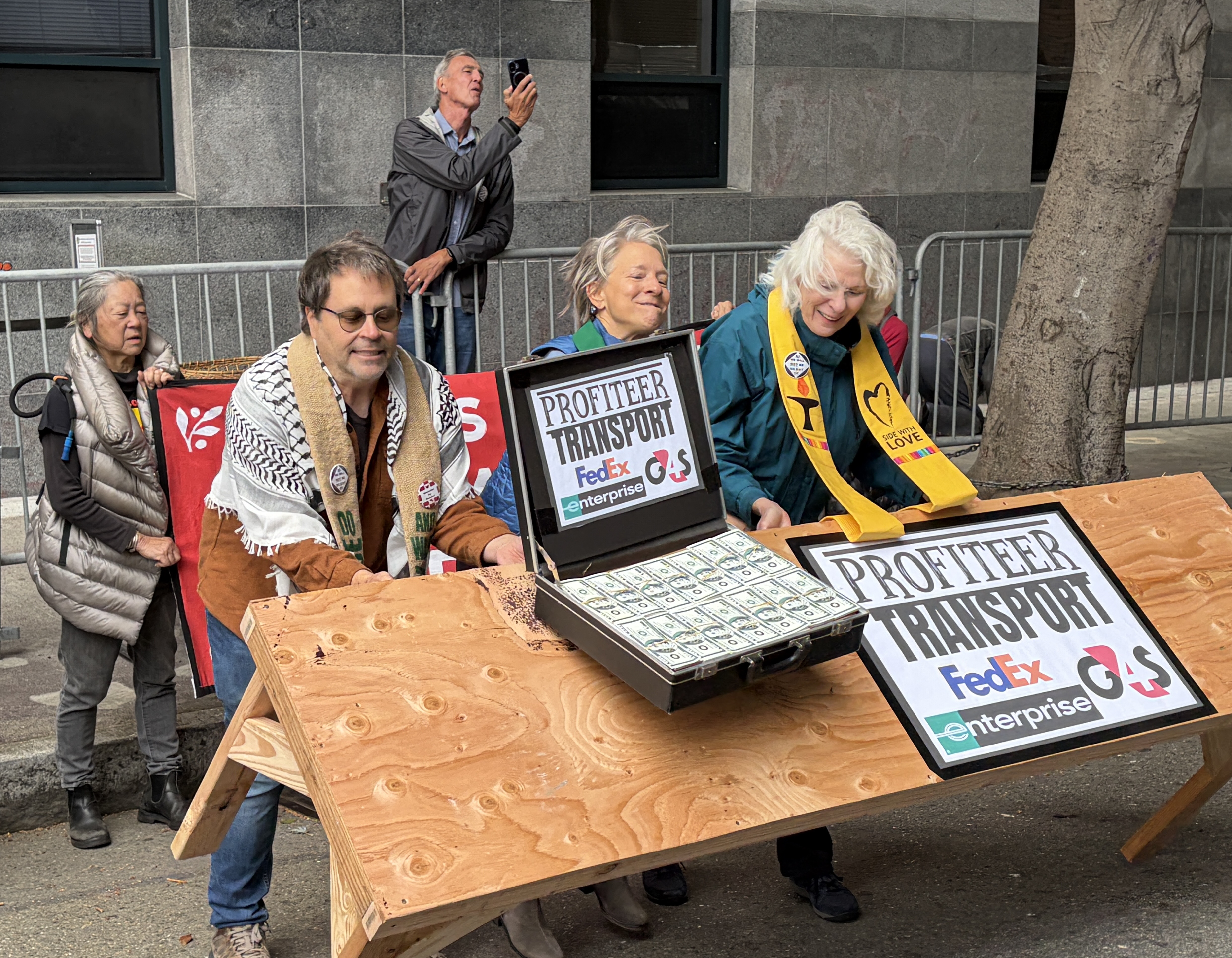
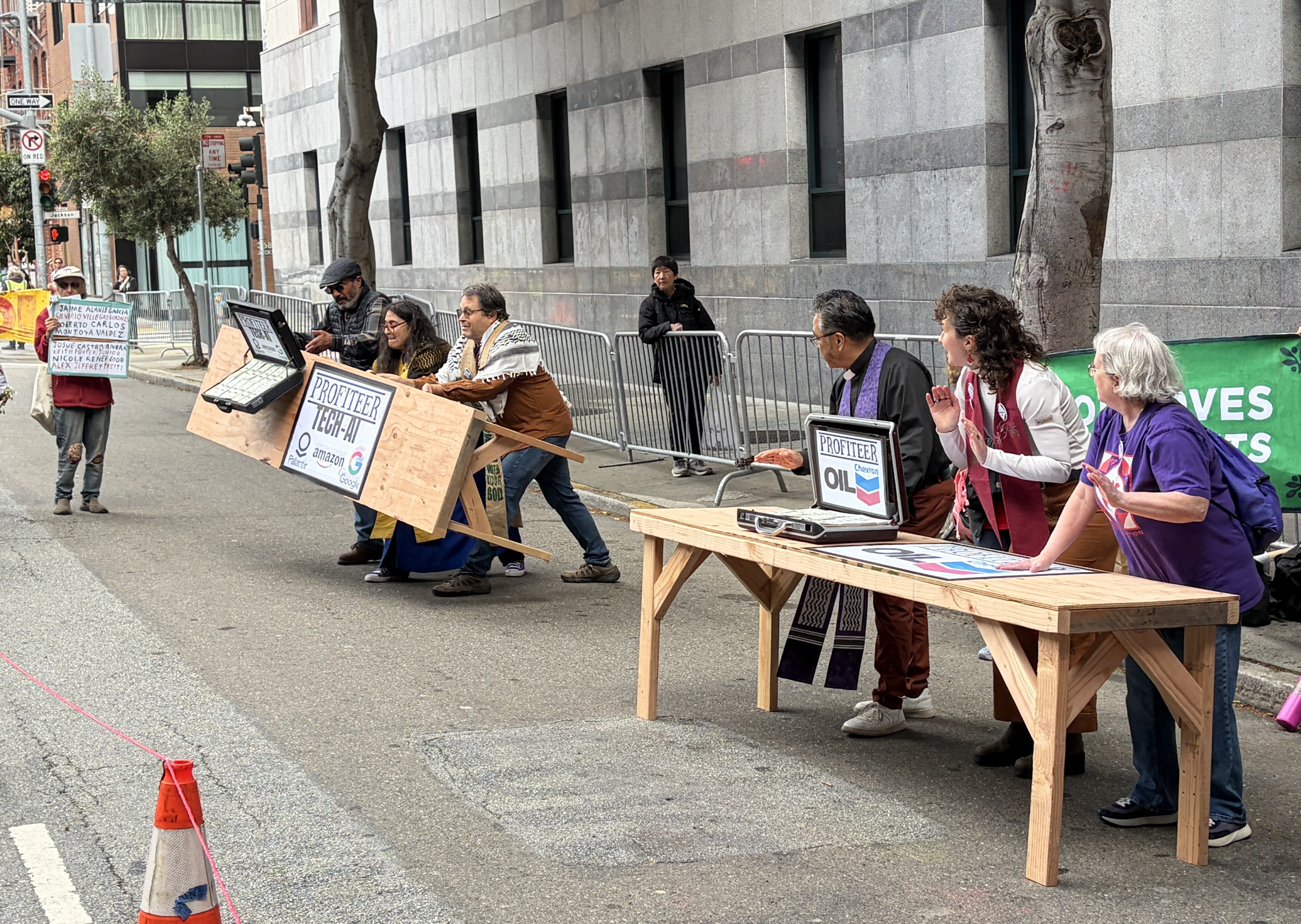
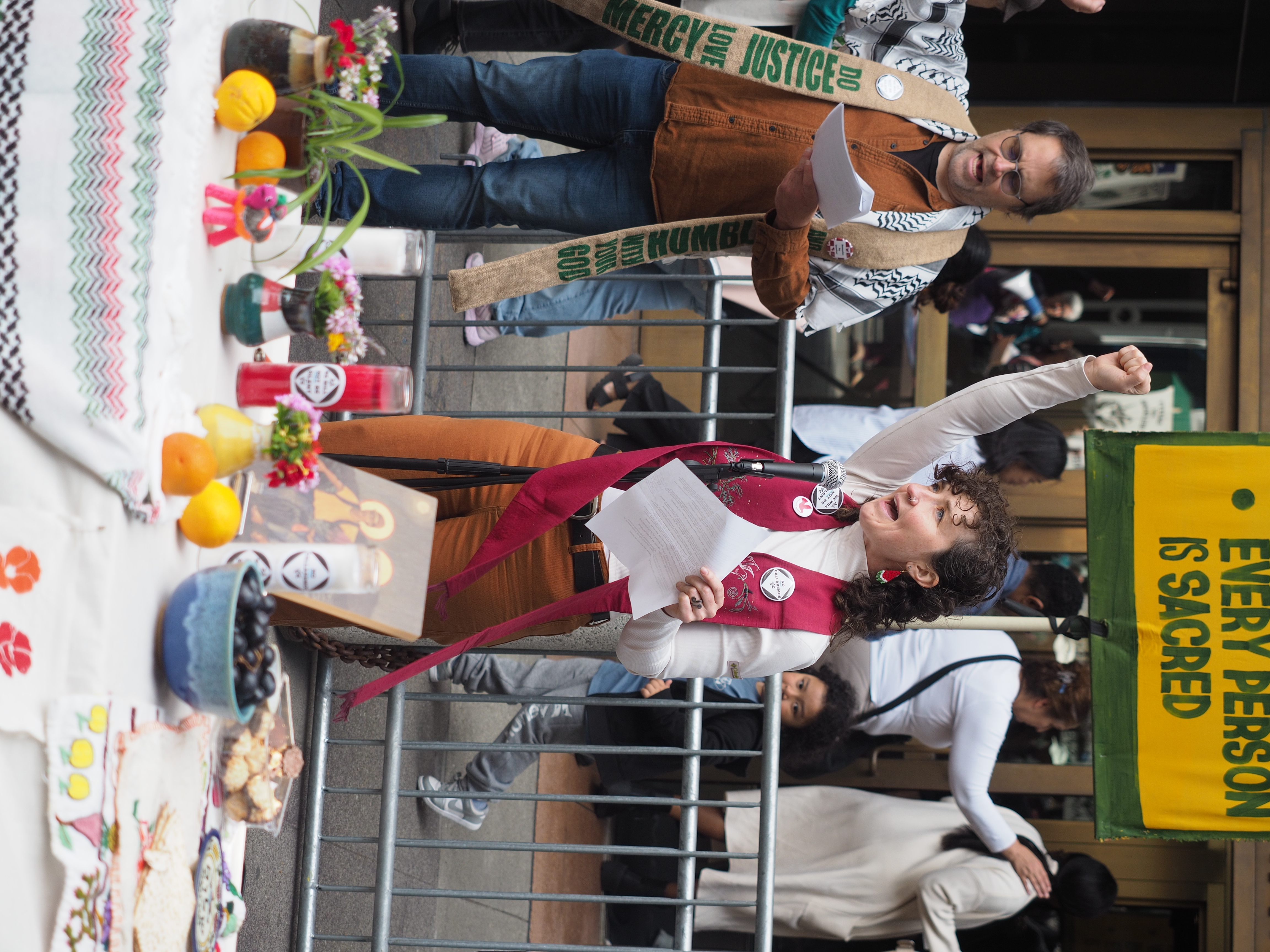
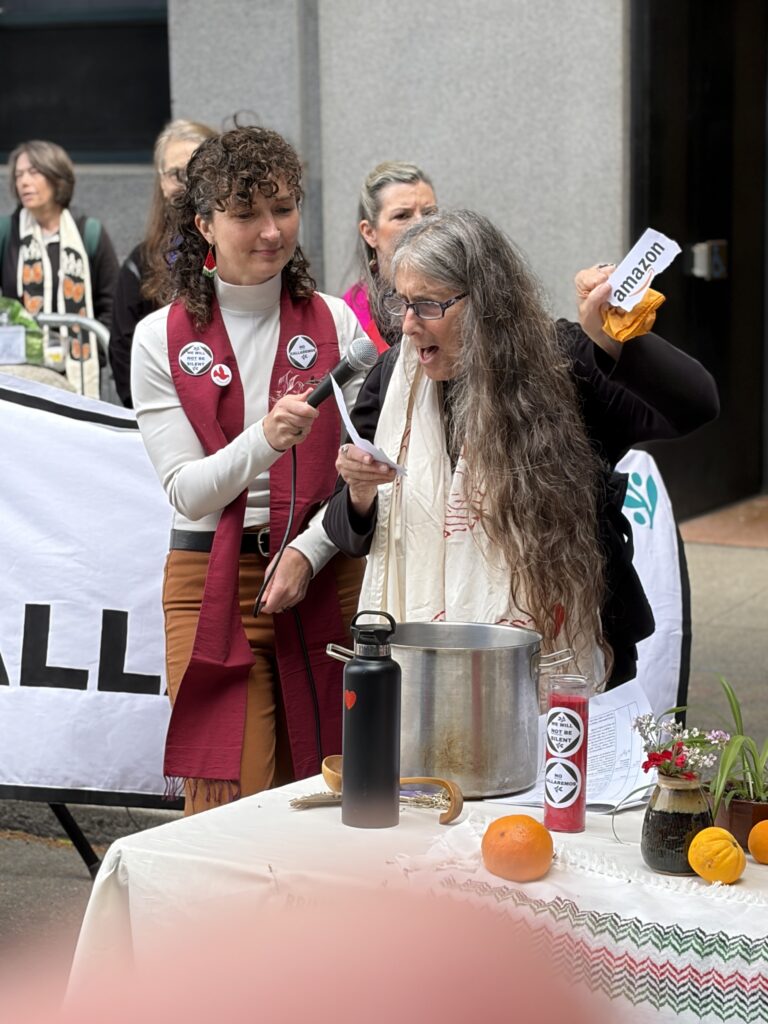
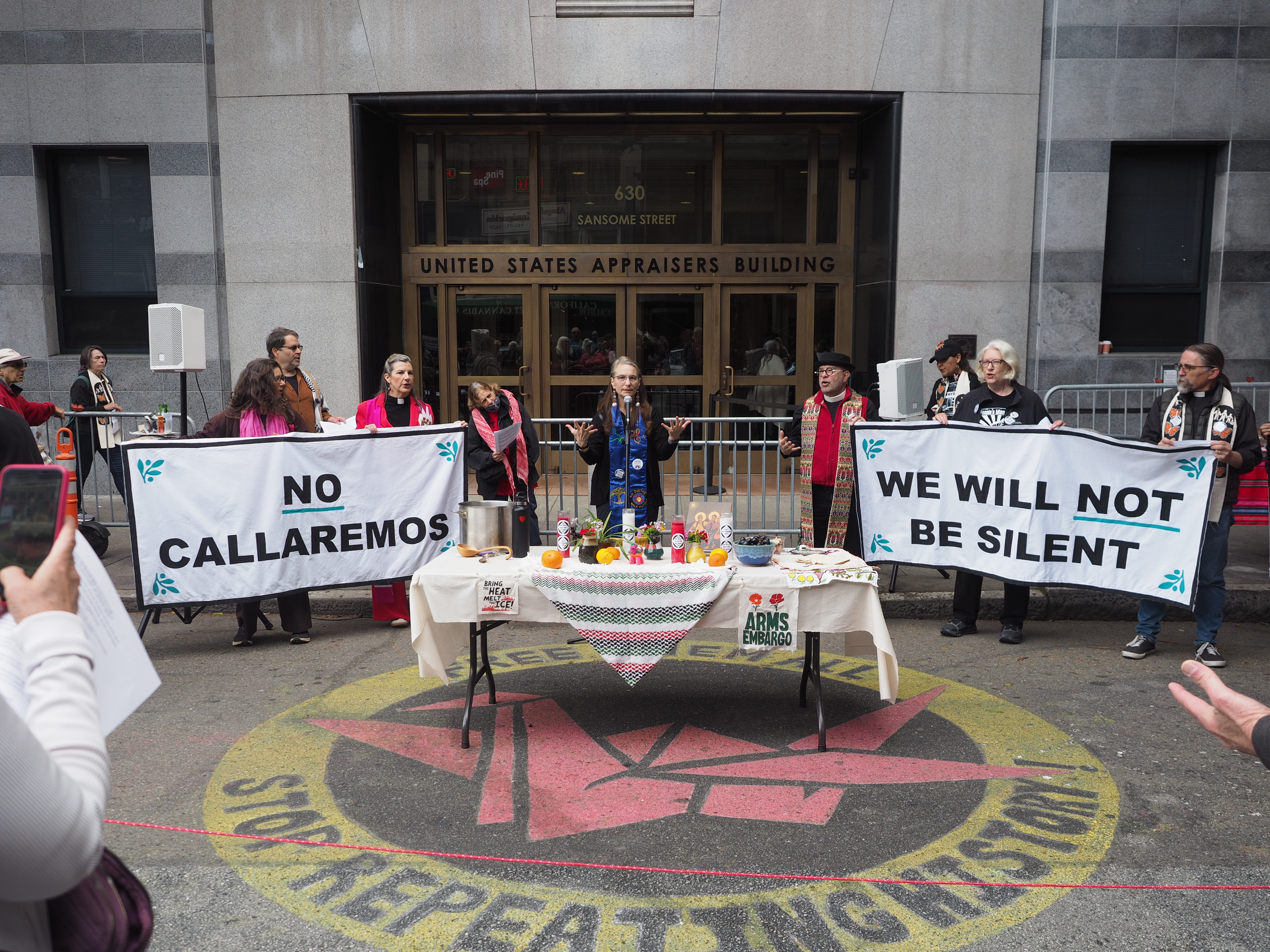
This coming Tuesday our Mennonite Action Bay Area chapter, along with the Interfaith Movement for Human Integrity and Shomeret Shalom will be ritually and theatrically flipping tables in front of the ICE building in San Francisco. As we began our planning over a month ago, Rabbi Lynn Gottlieb, suggested we flip tables to express our anger at injustice. Together with Nate Pequette of Sojourners, she reflects on the prophetic tradition in this way, which we’ll name on Tuesday:
“Caring for the poor is one of the central teachings of the bible. Throughout the Torah, the Divine commands the Hebrew people to care for the poor, the foreigner, and the stranger. They adopt a new form of economics in the wilderness by only taking the manna that they need so that all could have enough.
Dismantling all barriers that oppress and harm the poor is constantly reiterated by the prophets. Amos was the first prophet to express his anger at the lavish consumerism of his day while the poor went hungry in the street.
The prophet Isaiah proclaimed, ‘Is not this the kind of fast I have chosen: to loose the chains of injustice, to set the oppressed free? Is it not to share your food with the hungry and to provide the poor wanderer with shelter—when you see the naked, to clothe them and to not turn away from your own kin?’
The justice tradition was still alive and central to the emergent rabbinic movement at the time of Jesus. And Jesus learned through this tradition that the poor mattered, the stranger mattered, the immigrant mattered. Jesus taught, ‘Blessed are the poor for theirs is the kingdom of God.’ When Jesus entered Jerusalem and flipped the tables of money changers, he is following the prophetic example by taking his complaint directly before the halls of the powerful and using nonviolent direct action to bring attention to the exploitation of the poor by the upper class.”
Jesus was rightfully angry, just as we are rightfully angry at the injustice happening all around us. Just like Jesus processed through the streets, proclaiming a way apart from kings and empires, reportedly 8 million people were in the streets of this country yesterday, expressing their anger and snark and hope for a better world. The No Kings march is an amazing pep rally, strengthening us in our commitment to transform structures of oppression.
If you are feeling angry, I am with you! And I invite us to recognize the love that is deeper than the anger. It is a love for ourselves, for our world, and for all those who are vulnerable to the cruelty of tyrants and unjust systems. It is a love that says “it doesn’t need to be this way.” It is a love that says “we will work to reset boundaries and protect each other.” It is love that sustains us, just as it was love that sustained Rabbi Jesus and his movement.
Although Jesus knew his disciples would fail him in different ways, he extended love to them, and humbly washed their feet. This prophet who raged at injustice also modeled love and care, honoring the dignity of others, even in their imperfections.
Today we have the opportunity to practice this care for each other through foot washing. Members of Pastoral Care Committee will be up front, and you are welcome to come forward to receive footwashing, and you may also take a turn washing someone else’s feet, if you so choose. During this ritual experience, we will join in song together.
I think it’s totally fitting to practice footwashing the day after the No Kings march and a couple days before Mennonite Action literally flips tables in front of the ICE building – calling out corporations who are profitting from war, detention, and genocide.
As followers of Jesus we must love and care on the personal and systemic levels. I’m so moved to be a part of a congregation who is living into this calling.
As a further expression of care this Sunday, we will also be taking a special offering for our Sharing Fund. This fund is a critical and confidential source of support for many in our congregation, facilitated by Pastoral Care Committee.
Let us now move into a time of response. I invite you to take a breath. Join me in a prayer for this special offering. As the baskets are being passed, we will ready ourselves for footwashing.