A Theology of Disability: Faith Feels Like a Limp
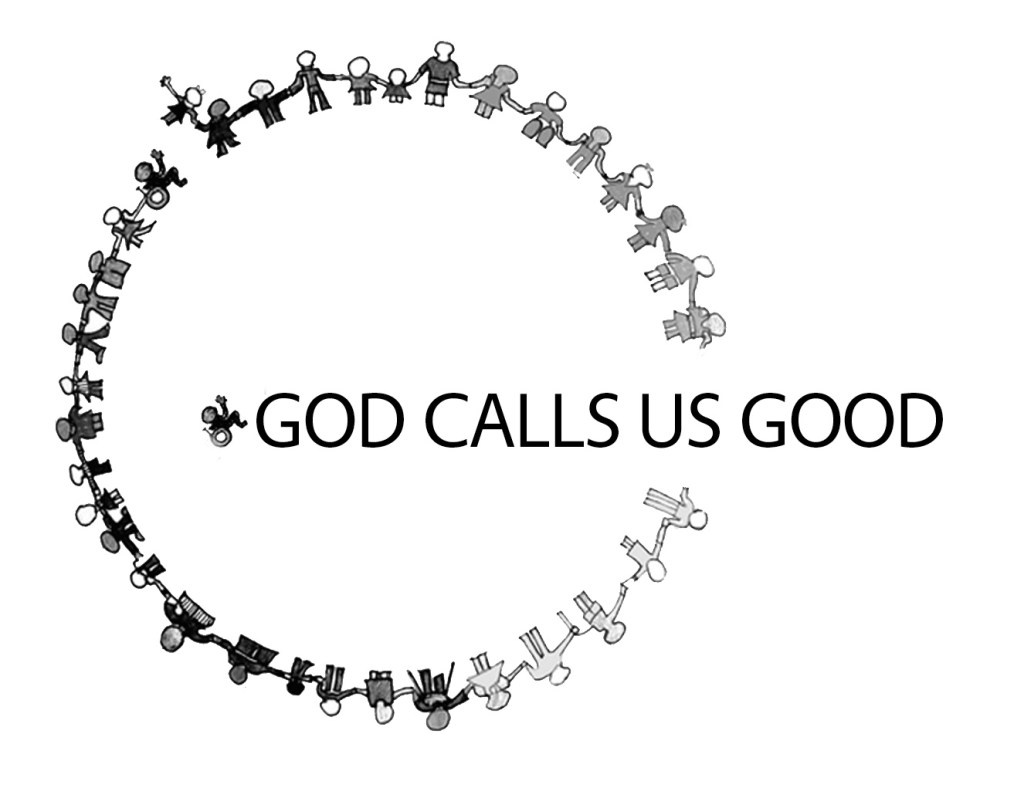
This is the first in our Back to the Basics Series: A Theology of Disability: God Calls Us Good. In this sermon, Joanna and Sheri preach on a theology of disability and how it can set all of us free.
Genesis 32: 22-32
Joanna:
As many of you know, I grew up in a family steeped in Christian perfectionism. [Personal story omitted.]
Ableist theology hits very close for me, and has been an enduring hallmark of dominant Christian theology. As we talked about yesterday morning, this is a systemic reality we’re dealing with. Its roots are deep and wide, dating back centuries.
In the middle ages disabled people were believed to be possessed or carrying sin. They were outcasts, sometimes tortured or worse.
Jump ahead to the eugenics movement in the 1850s which was focused on improving the human gene pool. Eugenicists worldwide believed that they could perfect human beings and eliminate so-called social ills through genetics and heredity. They believed the use of methods such as involuntary sterilization, segregation and social exclusion would rid society of individuals deemed by them to be unfit.
One of the founders of this movement, R.A. Fisher was a devoutly religious Christian. According to historians, “R. A. Fisher viewed eugenics as a natural addition to his Christian faith. He viewed eugenics as a form of salvation, part of his Christian faith that required expression in works.”
In 1907, Indiana became the first of 33 states to pass compulsory sterilization laws directed at people with genetic illness or conditions. The law was not repealed in Indiana until 1974. In 1927 the Supreme Court ruled that forced sterilization was not a violation of the constitutional rights of disabled people. It is more than disturbing the number of laws passed in the United States up through the 1950 that legalized sterilization and euthanasia of disabled people.
The Americans with Disabilities Act was introduced as legislation in 1988 and became federal law in the early 90s. At that point, and to this day, religious organizations are exempted from the implementation of the ADA in their facilities, programs and activities.
While reading articles about disability and Christianity, I found a recent image from a church parking lot. Instead of having the blue sign with a wheelchair and the word “parking” underneath, it had a wheelchair with the words “soon to be healed” underneath.
Dominant Christian theology, which informs so much of the dominant cultural values in this country, sees disability as a problem to solve – an ailment to pray away – or if nothing else, a condition to hide from view. Dominant Christianity says we are good and valuable if we are productive. Dominant Christianity assumes a heaven where no one will be disabled. Dominant Christianity demands perfection.
This is not the way of Jesus. This is not good news for anyone. This theological framework diminishes us all.
And it does not get the last word.
So I am going to turn it over to Sheri now, to give us a glimpse of what we could call a disability liberation theology.
Sheri:
My master’s degree is in feminist and liberation theology. Liberation theologies center the voices and experiences of people who had once been on the margins.What I’ve discovered her the years, with all the different liberation theologies that center the voices and experiences of marginalized folks, is that we are all set free when these voices/experiences are centered and have a chance to speak into our theology and interpretation of Scripture. Similarly, we are all set free when we center the voices and experiences of people with disability and allow that to shape our reading of Scripture and our theology. We are all set free when we embrace the new religious images, ideas and values that are brought to us by our disabled siblings.
One example is from Amy Kenny author of My Body is Not your Prayer Request: Disability Justice in the Church. She was diagnosed as a pre-teen with several rare disorders that cause her chronic pain and affect her mobility and, sometimes, cognition. She does a remarkable take on the story of Jacob wrestling with the angel that had me seeing this story in a whole new light.
Jacob is a not very likable character up until this point in the story. He’s a huckster. He cheats his older brother Esau out of his birthright, tricking his elderly father in the process. Understandably, Esau is angry and Jacob flees to his uncle’s house, where he does quite well over the course of two decades — 2 wives, 11 sons (yeah, the daughters aren’t mentioned), sheep and land. But he continues his ways by cheating his uncle, Laban, out of his sheep.
But now he wants to return home. He knows his brother might kill him when he sees him; Esau has said he would! And, so, for the first time in Jacob’s story, he feels vulnerable. First the first time, he doesn’t feel like he can control what’s going to happen or that he can will his way into making things work out. And he prays to God to save him — for the first time in his story. He asks God to deliver him from what some might argue was a righteous fate. So, here’s what happens: Genesis 32: 22-32
Here, God, through the angel, is intentionally disabling Jacob. He walks with a limp now. This wasn’t a punishment, and it wasn’t a sign of weakness. It’s actually how God brings restorative healing to Jacob. What? As Kenny says, it “becomes a mark of the covenant for Jacob, who becomes disabled at a crucial phase of his narrative. His disability acts as catalyst for radical transformation.”
Kenny continues: “The divine encounter doesn’t just change Jacob’s name and physicality; it heals Jacob, transforming his perspective. Before this, he’s ready to wheel and deal everyone out of reputation, inheritance and sheep. Who cares that he has cheated his brother, lied to his father and tricked his uncle? That is the price to pay for the cushy lifestyle full of health and wealth that he named and claimed. He’s manufacturing his own prosperity through materialistic gain. He’s got it made! By every external marker, he’s living his best life. He left Canaan with nothing and returns with a serious entourage that is Instagram-ready: two camps full of stuff and servants. Jacob believes he’s got it all by relying on his own hard work and conniving schemes. He doesn’t think he needs God or God’s provision — which reveals the fable of independence common among non disabled people, even today. He’s living the myth of scarcity that so many of us have inherited: That we must continue the rat race of workaholism to manufacture our own success.”
It isn’t until he is disabled that Jacob begins to understood who God is or what a blessing is. This limp is an impairment — it means he’s going to have to rely more on others. He’s not going to be able to rely just on his own physical strength. Maybe he can’t walk as far anymore. Maybe people are going to have help him sometimes; he’s lost some independence. Maybe he’s going to experience pain in his body that he can’t just will away. He’s beginning to understand human limitation. He can’t do it all anymore, and he can’t be successful in the way he imagined he wanted to be.
He begins to be converted to a new set of values — his stuff, his success is not what’s important. What’s important is being in a community of interdependent relationships with each other; what’s important is depending on the living God. The limp is a sign of that. It’s a constant reminder to him of this reorientation of values. As such, he becomes the symbol of the nation of Israel and a reminder that will only thrive insofar as they realize their need for each other and their need for God.
Kenny writes: “God doesn’t seem interested in our self-improvement projects or independence. God is more invested in our transformation into mutual thriving throughout the community of creation. Relational interdependence is always the goal. We are not trying to get to a point of stability where we don’t need God or the beloved community. Disabled people already know this truth well because our lives are beautiful portraits of interdependent flourishing…. We are the faithful few who know what the interdependence of faith feels like, and it feels like a limp.”
What are some of these blessings of disability? This is what I’ve learned so far:
- Accepting human limits — accepting my limits, the limits of my body and mind in this moment
- Celebrating ourselves even if we are not measuring up to “monocultural” and frankly boring measures of success or normalcy or desirability or excellence
- Claiming our worth beyond concepts like productivity, independence, professionalism, etc.
- Loving our body minds as they are and not always wanting to optimize them or improve them or change them
- Unburdening ourself of the belief that we are what we have accomplished today
- Knowing that we need each other to be whole. There is no wholeness outside of this web of interdependent relationships in which we live and move and have our being — not just with each other, but with the entire community of creation we see around us — the trees, soil, air, creatures.
May we all continue to grow into this freedom and liberation.