Sermon: He is Risen Indeed?
Throwback Sunday
Mark 16:1-8, Ezekiel 37:1-6
Here we are at our annual Throwback Sunday, where we look at older theological concepts that we may not find helpful anymore or with which we struggle. In the past, we’ve taken a dive into heaven and hell, original sin, the devil and demons, eternal life. Today, we are looking at resurrection, the central tenet of the Christian faith. Just a light late-summer sermon topic.
I want to begin by naming the range in this room. I am sure some folks here believe in the physical resurrection of the body of Jesus while some of you do not believe in a literal resurrection of a body and have a more metaphorical way of understanding what happened on Easter morning. Some of you may believe Something Big happened 2000 years ago but don’t know what. Some of you may have stopped thinking about the resurrection and feel it has little relevance to your life right now, and some of you may be hungry to believe. We’ve gotten so good at expanding our language for gender and sexual identity, maybe it’s time we did the same for the spectrum of resurrection belief. “Hi, I’m Sheri, and I’m resurrection curious.” “Hi, I’m Jim, and I’m resurrection expansive.” “Hi, I’m Joanna, and I’m resurrection-agnostic but Easter hopeful.”
I also don’t want to make most of this sermon about the question — “Did it happen?” Unless there was a pre-AI video camera trained on the tomb on that Easter morning, the truth is there is no way to empirically answer that question in ways that make sense to scientific, hyper rational Western minds.
So, let’s explode the resurrection binary of “did it happen or not?” Let’s instead ask: What does resurrection mean and in how many registers it is true? Because you can believe in the literal resurrection of the body of Jesus Christ and not live your life like that means anything. Pete Hegseth, our Secretary of War, is a conservative Christian who believes in the literal resurrection and, at a recent Pentagon prayer service he prayed that God send “overwhelming violence” against the “enemies of righteousness.” I will take a resurrection agnostic who is truly trying to follow the way of Jesus any day over a resurrection literalist who thinks the Prince of Peace is a god of war.
So let’s dive into resurrection as something that is meaningful, as something that can change our lives, not a belief we hold in our heads that never transforms our hearts or our communities. Here’s how I want to get there: that “resurrection,” like all great Mysteries, isn’t one claim — it’s a family of claims, operating in different registers of truth and meaning. The registers I want to look at this morning are historical or literal, biological/ecological, psychological, relational. I want to walk through these, not because I’m going to land on one as the right answer, but so each of you can ponder what is most meaningful to you.
Let’s start with that historical or literal register: What actually happened that first Easter morning? Like I said, there’s no proof. There is only the testimony of 1st century witnesses, there is the witness of the church over two millennia, and there are people who even to this day — like Paul on the road to Damascus — have mystical visions of the risen Christ. But clearly, something happened that took a handful of frightened followers and turned them into a people willing to die rather than abandon the radical love and hospitality Jesus had taught them — a movement so threatening to Empire because it insisted death wasn’t the end of the story, it hadn’t won and so neither would Rome. That’s willingness to die is not nothing. People don’t usually get martyred for a metaphor.
In addition, the New Testament scholar N.T. Wright points out that nothing in Jewish resurrection expectations of that time predicted a lone resurrection of one righteous man, ahead of the general resurrection of all the righteous dead that Jewish people expected to occur at the end of history. It’s genuinely odd that the first Jewish followers of Jesus landed on this lone resurrection idea. Some people would argue that that indicates that something happened to make these Jewish followers believe this. And obviously not everyone agrees on what this means — some read ‘resurrection’ here as a claim about a transformed body, others as the language of vindication and ongoing presence — but something happened that broke open their categories.
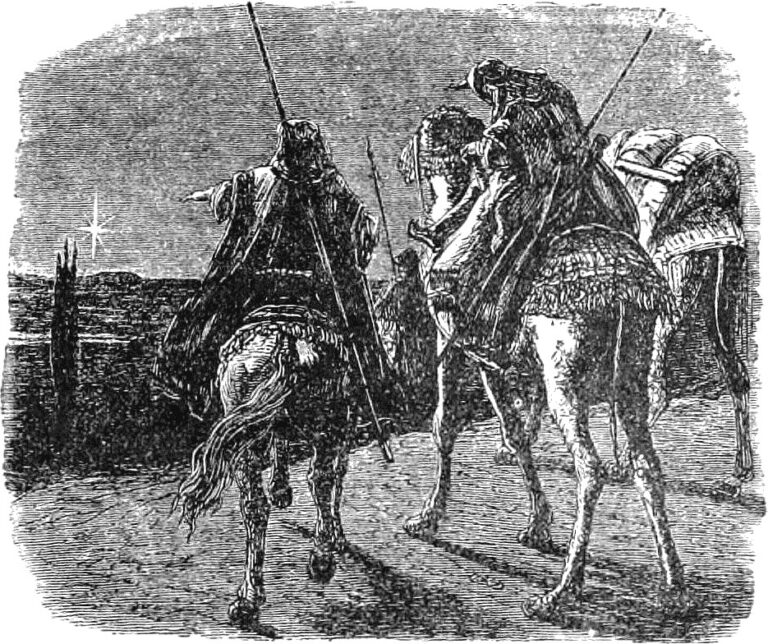
There is no explanation we can land on with certitude. Even our earliest Gospel story about Easter morning, in Mark, itself doesn’t over-explain what happened. (Read Mark 16:1-8). Mark ends with the women at the empty tomb running away in terror and telling no one — no triumphant appearance, no explanation.
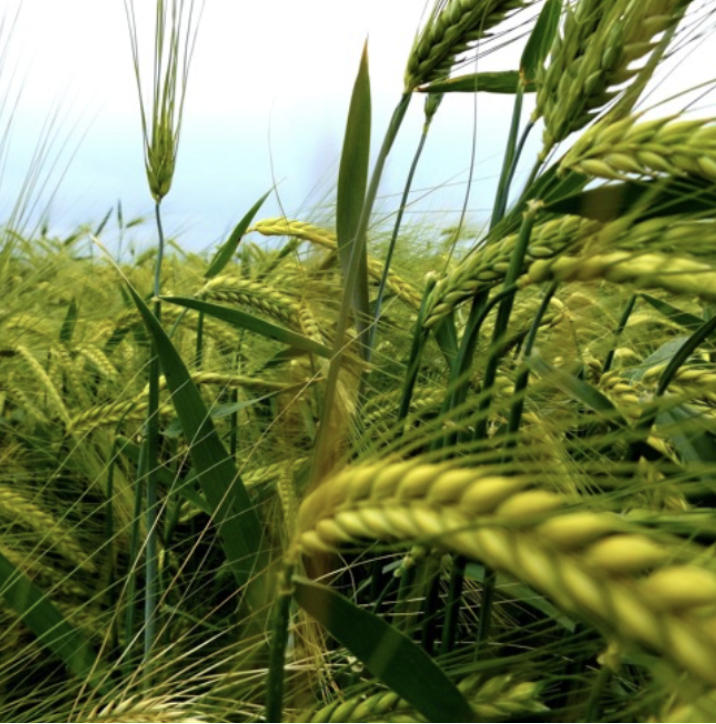
I think we’re going to have to get out of our literal, rational minds to really plumb the meaning of resurrection. When the earliest Jesus followers were asked “how can this be?” “How are the dead raised?” they didn’t reach for a rational doctrine. Paul, writing to a skeptical, arguing church in Corinth, reached instead for the metaphor of a wheat field. He writes in I Corinthians 15: “What you sow does not come to life unless it dies.” “You sow a bare seed… but God gives it a body.” His answer to “how is this possible” wasn’t proof. It was: look at your own fields. You’ve already seen this happen. Death is not the end of the story. Which leads us to the biological/ecological register.
On Monday, I was hiking in an old-growth redwood forest near Arcata. We passed a downed redwood — a massive, ancient tree, possibly a thousand years old, finally felled by lightning or disease or old age, lying on its side across the forest floor. And out of its decaying body, more redwood saplings than I could count were growing, as well as ferns and moss. If I’d gotten close enough, I’d have found the soil around it teeming with insects living off the fertility that tree was releasing back into the ground. Small mammals perhaps making nests in its hollows. That fallen giant wasn’t a monument to death. It was a nursery.
We see this constantly in nature. Every autumn, the leaves die and fall and rot into the ground, creating new soil. Every spring, the trees leaf out again. Left alone for a hundred years, a clear-cut hillside becomes forest again. Left alone for ten thousand years, even land scraped bare by fire or flood becomes abundant with life. Even this blue planet will regenerate itself if we extinguish most life through climate catastrophe; the fossil record shows that after each of the five mass extinctions in Earth’s history, life came back. This is not a metaphor I’m imposing on nature. This is what nature actually does. Death is not the opposite of this system; death is the raw material this system runs on.
And it’s not just our small blue planet. Stars die and, in dying, scatter into the universe the very elements — carbon, oxygen, iron — that go on to become new stars, new planets, the cells of our bodies. The universe itself is still expanding, still generating, 13 billion years in and it is not remotely done. I don’t think resurrection is an interruption of the laws of nature. I think resurrection — new life, the life that cannot die, that cannot be contained — is one of the laws of nature.
And this isn’t just cosmic and far away. It’s also, really, personal. My body — this one, right here — is going to become compost for something else. This body is going to become that felled redwood tree, the seedbed of new life. That’s not a grim fact I’m asking us to swallow bravely. That is, I’ve come to believe, the same pattern Jesus enacted, at human scale, so that maybe we would stop being so afraid of it. I happen to believe my consciousness also will live on after I die, but there’s a real way in which the miracle of resurrection doesn’t even need that belief. Your body will decompose and one day some molecule that made up your body may become part of a star. Death is not the end of the story.
Another register: the psychological. I have been a pastor for more than 25 years, and more times than I can count, people come to me dead inside. Some part of them — their capacity for joy, or trust, or hope — has been so wounded, so grief-shattered, so worn down, that it has died. And then slowly, over time, I have watched that part of them come back to life. It takes time, but it has always, so far, happened. It’s one of the reasons I am profoundly hopeful.
That is resurrection — lived, observable, repeatable, right here among us. The prophet Ezekiel saw a valley of dry bones and heard the people cry, “our bones are dried up, and our hope is lost.” (Read Ezekiel 37:1-6.) If you have ever come back from a place like that — and most of you have — you already know this text is not ancient history. It’s autobiography. Death is not the end of the story.
There’s one more register I want to name — relational — and I name it gingerly, because I know for some of you this is going to feel like the deep end of the pool. Across cultures, across centuries, people report staying in contact with those who have died — not just as memory, not just as metaphor, but as something they experience as genuinely relational. I’m not going to stand up here and adjudicate the evidence for you. I’m not qualified to. I’ll just say this: it is a very old, very widespread piece of human testimony, and I don’t think our culture’s confidence that death is an absolute wall is nearly as settled as it pretends to be.
There’s a resurrection story that speaks to exactly this. On the road to Emmaus, two grieving disciples walk for miles beside a stranger, pouring out their heartbreak, not recognizing him until he breaks bread with them, and then they see. And in John’s gospel, Mary stands weeping at the empty tomb and mistakes the risen Jesus for the gardener, which, if you think about it, is exactly right. He is the gardener. He’s the one who tends dead ground back into life. She doesn’t recognize him until he says her name. There’s a deep relationally that transcends death. Death is not the end of the story.
Historical. Ecological or biological. Psychological. Relational. I’m not asking you to choose one register and defend it. I’m asking you to notice which ones you already believe, which ones gives you meaning.
Which brings me to one of my favorite hymns in our hymnal — the one we will sing during the offertory — Now the Green Blade Rises. The hymn text doesn’t argue for any one of these registers over another. It just sings: “love is come again, like wheat that springeth green.” Historical love. Ecological love. Psychological love. Relational love. All of it, at once.
I don’t know exactly what happened on that first Easter morning. But I know this: something in you has died, or is dying, right now, today. Something in us, in our world, has died, or is dying, right now, today. And I believe — historically, ecologically, psychologically, relationally, all four, or however many of those you can hold — that that death is not the end, that something new is coming, like wheat that springeth green.