Sermon: Living in Love
John 15: 1, 4-5; 1 John 4:7-8, 11-12, 16
Of the 8 billion people on the planet, we are some of the few fortunate enough to live in a Mediterranean climate zone. While Mediterranean refers to the countries that rim the Mediterranean Sea, it also refers to a kind of climate zone that is scattered throughout the planet — one that – to my mind – is about the closest thing we can get to paradise on earth. Only 2 percent of the globe enjoys our benign Mediterranean weather pattern, where warm, dry summers follow mild, wet winters – and where a profusion of plants grow. Even though the Mediterranean climate zone comprises only 2% of the earth’s surface, 98% of the earth’s plants can grow within it. It’s overflowing with life.
It is a small wonder, then, that the metaphor of the Garden of Eden sprung from the imaginations of a people who also lived in a Mediterranean climate zone. Some of humanity’s most ancient and widespread crops – figs, olives, grapes – were first domesticated in this region, known as the “Fertile Crescent,” where the very idea of agriculture came into being some 8,000 years ago.
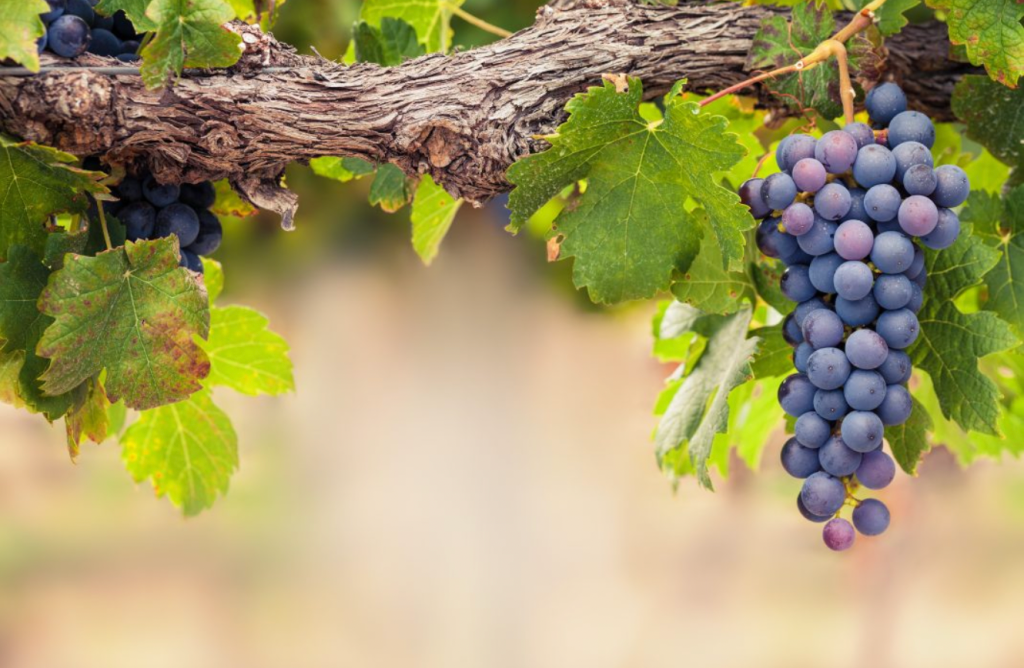
And so earthy, sensuous agricultural images permeate the writings of the Hebrew Scriptures and the New Testament. One of their favorite images was that of the grape vine, a plant celebrated and loved by the people of Biblical times. The grape vine, of course, is a plant also much beloved in the Bay Area as well. I read a few years back that Bay Area folks spend more money on wine than any other city in the country. And perhaps this is not surprising. We are the only Mediterranean urban area in this country. Grapes and vineyards and wines inspire our imaginations, and provide one of the central metaphors of the good life here in California.
The people of Biblical times were similarly inspired by the grape vine. In Genesis, vines were the source of life and prosperity. Prophetic utterances of doom foretell languishing vineyards and vines with withered leaves in Isaiah. The Song of Songs, that incredible ecstatic love story, is set in a vineyard. The Hebrew Scriptures refer repeatedly to the Israel itself as God’s vineyard, from which the divine gardener longs to harvest good fruit.
It is no surprise, then, that the Jewish rabbi Yeshua, Jesus, took up the images of the vine and the vineyard and uses them to talk about his vision of the “good life” here on earth. In the passage we heard today, that metaphor is is used to explore some of the fundamental aspects of faith: Who are we? How are we connected to God? How are we connected to each other? How do we live “the good life,” that is, how do we be good people doing good things?
The answers found in this passage are simple, really. Jesus says: Live in me, just as I live in you. Some translations say “abide in me, as I abide in you” or “make your home in me, as I make my home in you” — my favorite. Stay connected to me and you’ll bear much fruit because I am connected to God. In fact, you can’t bear fruit unless you stay connected to me, just like a branch cut off from the vine will wither and die and not bear fruit.
This image of the vine and branches has been used throughout the centuries by followers of Jesus to talk about what it means to produce “good fruit or good works.” But I think it’s also a metaphor that has been misused or perhaps misunderstood. In Anabaptism, in particular, the emphasis has typically been on producing much fruit, rather than on living in Christ, making the Divine our home.
This emphasis on fruit production comes from a compassionate impulse. Faced with the urgent needs of the world, we feel compelled to “bear much fruit.” In our passion for justice, in our impatience for change, in our belief that “faith without works is dead,” we can come to believe that service and social justice work is more urgent than (and can without cost be severed from) sustaining contact with the Vine, the Source of life. We become quite ready to appropriate the aspect of Jesus’ metaphor that best affirms our own core values — of productivity and effectiveness – while ignoring the contemplative element of simply “abiding” or living within the Divine.
In fact, these verses are very clear as to what comes first. Nowhere in this passage does Jesus command his disciples to bear fruit. They are simply asked to live in him and, through him, in God. Fruit-bearing is not a command here, it is a promise. If you want to bear fruit, don’t focus on bearing fruit. Focus on making your home in God. The fruit will follow.
So, what does it actually mean to live within the Divine, to make our home in Christ and God?I’ve just said this passage from John has a simple message, and I think it does, but actually living out that message but not be simple for some for many of us. Some of you may not know what you believe about God or Christ, or just don’t have experiences of God or Christ such that the idea of “living in Christ” makes sense to you.
Some of you may have felt sense of what that means to make God your home, but feel like you’re far from it much of the time. Maybe, on silent retreat or on vacation, you’ve had this sense of feeling connected to God or Christ or Spirit, you have this sense of making your home within that reality, and once you get back to your busy life full of responsibilities and the thousand and one things, that sense of abiding, of of dwelling, dwindles.
Maybe some of you are experiencing so much pain in your life — whether physical or emotional — that “living within the Divine” feels unobtainable. Maybe you actually feel cut off from the the vine, from the Source of life, like you’re one of those branches that has been severed from life-sustaining connection to the vine.
I was thinking about all this because I spent all of last week with my brother, who had undergone major back reconstruction surgery, and who was in a lot of pain and discomfort for much of the time that I was with him. It made me think about growing old myself, and the pain and discomfort — emotional or physical — that may await me in the coming decades. What does it mean to abide in Christ during such times? I mean, it’s kind of easy for me to feel now like I am making my home in God. I can tap into that sense of connection to the Divine. But will I feel that way if my body is experiencing pain? Will I feel that way as loss starts closing in? And we don’t have to be old, right, to experience emotional or physical pain. Many of us experiencing that right now. We have burdens, aches, anxieties, unease.
As I was contemplating all this, I went back to look at the Scripture passages called for for this Sunday — there’s always four of them. And I read the passage from I John that is meant to accompany the passage from John that we just heard. Russ is going to read it now.
When I heard this passage from I John, something became simple for me again. Abiding in Christ, making our home in the God, means to abide in love because God is love. It’s really that simple.
So for those you you who think you don’t experience God or Christ or don’t even believe in them, then I would say: Have you experienced love? Do you believe in love’s existence? Because, if you do, then this passage is speaking to you: Live in love. Abide in love. Make your home in love.
For those of you who are feeling busy, harried overburdened. Here’s my guess: I bet a lot of you are feeling that way because you are living in love. Because you are caring for someone or a group of people, and because there’s so much need that you are trying to meet – needs you are trying to meet out of love. And the effort to meet that need — and because you often can’t meet all those needs — leaves you busy, harried, overburdened. You are living in love. If you didn’t care, if you didn’t love, you wouldn’t feel overburdened. Love doesn’t protect us from pain, it opens us to it — and it also helps us bear that burden and, sometimes, heal it. Me bathing my brother every morning as he sat in his chair because he couldn’t, shampooing his hair, wiping his body with a warm cloth, That was me living in love, even as it was painful for me to be with someone who was in so much pain.
And if you are one of those people who feel cut off from the Vine, cut off from God. Let’s talk about how you can get reconnected to who really are. Because you are a beloved child of God, made in the image of Love, connected to the Source — whether you feel it or not. You are a part of the Vine.
When we make our home in Love, then we really are living in the Garden of Eden. We really are living the good life.
I want to close with this poem from Steve Garnaas- Holmes:
Christ, you are the vine.
We are your branches.
We are all part of one another.
I am rooted in you,
your life flowing through me.
In you I flourish.
It is not by my talent or capacity,
but your love in me, by which I bear fruit.
When I am wounded, your life renews me.
When I am weak, other branches sustain me.
When I lose my way, your hold on me restores me.
Your Spirit bears fruit in me, and I offer it to the world.
You, the thriving vine,
I your love-bearing branch.