Reflection: Disability Talk
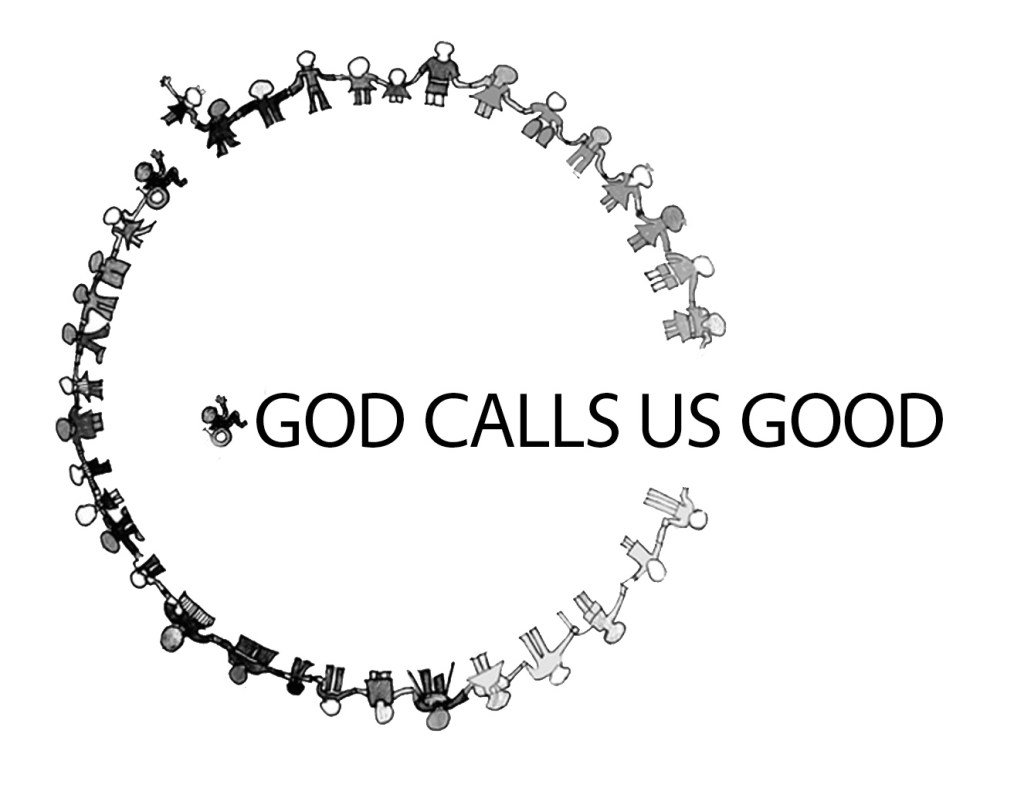
This reflection by Eli Ramer is from the third Sunday of our Back to the Basics Series: A Theology of Disability: God Calls Us Good.
Back in the 1970s my mother was the co-director of a clinic for disabled people, down in Orange County.
Some were disabled from birth, and two thirds were young men, most of them wounded in Vietnam. And boys with sports injuries – tackled playing football: spine shattered. Dove into the pool at a bad angle: broken neck. Many paraplegics, quadriplegics, missing limbs, most in wheel chairs.
Living with a disability wasn’t alien to me. Aunt Luba had polio as a girl and hobbled on what she called “a withered leg,” and Uncle Henry had spinal meningitis when he was three and lost his ability to hear and speak, back in the days when disabled children were hidden away, an embarrassment to their families, sent to special schools for people called crippled and retarded.
Mom took me to the clinic for the first time to a dance party. A small rock band was playing in a large room filled with people spinning in their wheelchairs, as they were able, waving a free arm and singing. One girl my age was turning and laughing with joy, as I’d never seen anyone before, and I was utterly transformed.
I wasn’t out yet as gay, but back then, and today in lots of places, gayness, queerness, is considered, if not a sin or mental illness, a kind of developmental disability. And I’m vision-impaired. I can’t drive, or ride a bicycle, because I can’t locate objects around me when I’m in motion, as each eye sees in different ways. This condition, sometimes called an “invisible disability,” does come with a few little gifts. For example, the sky is a slightly different blue in each eye, and when I look at it with both eyes I see a third color, which is a lovely. So I wasn’t in a wheelchair, but I felt at home in that room, in a way I’d never felt before.
After the band stopped playing Mom introduced me to three of the patients, in their wheelchairs. For me the word “crippled” was a cultural label that came with pity, if not annoyance or sometimes even disgust, and I’d never heard anyone call themselves a “Crip” before, and with pride. “This is who I am!” And coming from a culture that divides humanity in two – Jews and Gentiles – I was amazed to be with people who also divided the world in two. I remember one boy in his wheelchair being asked by the girl whose dancing awed me how a party was that he’d gone to. He grimaced and said, “I didn’t stay long. Two Crips and a room full of Tabs.” I could feel the energy shift and could almost hear someone say, “You know how those Tabs are!” But being very shy, I had to build up my courage to ask him – “What’s a Tab?”
His answer was another life-changing moment. “Tab,” he said, “stands for temporarily-able-bodied.” He paused for that to sink in and added, “That’s you and everyone else in the world who isn’t already a Crip. You’re fine now, but tomorrow you could be in a wheel chair too.” Wheel chair. My vision-impairment and gayness invisible, still, I knew what he meant.
On the way home Mom and I talked about what it’s like to be “normal, healthy, whole” one minute, then disabled the next. Accident, illness, old age. Tab. Tabs. Perhaps you’ve heard that expression before. Perhaps not. Take a moment to think about it, about the majority of people in the world. Not normal. Just Tabs. Feel it, try it on for size. “I am a Tab.” Or, “I am a Crip.” Look around the room, the screen. See who’s here. How does your brain label everyone?
We tell an ancient story about how we’re all created in the image of God. God, walking, in a garden. Or – God in a wheelchair, like the prophet Ezekiel’s vision of God in a chariot. This image a teaching from disability activist Rabbi Julia Watts Belser.
Tab. Crip. All of us in the image of God. Goddess. Goddex.
I have another invisible disability – MCS, multiple chemical sensitivity. If I walk into a room and you’ve used a scented skin or hair product, washed your clothes with scented detergent, or if the room was cleaned with scented products, I get a headache that can last for two or three days, and some scented products make my windpipe collapse. Scary. But since Covid, I’m never inside with anyone for more than a few minutes, I’m always masked – and ironically, I’m healthier than I’ve been in years.
And did you know that many scented products are hormone blockers and interfere with people’s meds and chemotherapy? So these products are dangerous for – everyone – even if they, you, don’t have overt symptoms. Yet. Think – Tabs.
Seven years ago a few of us at Sha’ar Zahav instituted a fragrance-free policy, inspired by the one at the East Bay Meditation Center. Please visit their website for more information. The policy was met with some resistance, at Sha’ar Zahav and here, of people saying, or once – and he’s a doctor – yelling at me – “No one has a right to tell me what to do with my body!”
We did our best to have follow-through, but it didn’t work. Until a group of younger members joined, who grew up in a different world than I and my age-peers, younger members with a range of disabilities, in the spectrum. Whereas the folks my age crept around saying, “Please consider this,” our younger members – demanded it! When Covid came and we found ourselves on Zoom – they insisted upon equal access. Closed captioning, signing when possible, the banning of blurry and virtual backgrounds as they cause dizziness, headaches, and trigger migraines and even seizures in vision-impaired people like me.
Fierce. Marvelous. Like the prophets of old. In wheelchairs, homebound, legally blind, and some of them – their words – fat activists – when I was taught that it’s polite to say ‘heavy’ or ‘overweight.’ Fat. Yes. They name it. Crip. Tab. Human. All of us b’tzelem Elohim – in the image of God.
So this is our work now, here, at home, in all our communities – to create a world in which everyone is included and able to participate in every event, always. Not the world I grew up in, and certainly not my aunt and uncle’s world.
The United Nations estimates that by 2050 – not that long from now – there will be one billion climate refugees. What will that world be like? What kinds of disabilities will increased heat, famine, flooding, extinctions, and new diseases create? The time to think about that is NOW! And it’s time for us to start a disability and inclusion group – here!
Julia Watts Belser has a new book – Loving Our Own Bones: Disability Wisdom and the Spiritual Subversiveness of Knowing Ourselves Whole. A Professor at Georgetown University, she has several talks on YouTube and on her website, which is her name dot com. There are many other sources of information on disability and I mention her because she’ll be speaking at Sha’ar Zahav in January. I’ll put info in our weekly email when it’s posted.
So here we are. Together. All of us. In the image of Goddex. Goddess. God. In bed. On feet. On wheels. With walkers. Canes. Together. One.