Sermon: Jerusalem Council and Radical Inclusivity
By Joanna Lawrence Shenk
Acts 15:1-18
As I begin the sermon this morning I want to do something that I haven’t done for awhile, which is to give us some geographical orientation to the text. Today our story is from the book of Acts, which many of us, I imagine, have heard referred to as the Acts of the Apostles. However, a more accurate translation is “the activities of the messengers” according to the Restored New Testament translation. I was reminded of this translation by Eli Ramer, who is a Jewish member of FMCSF. Two years ago he and an MVSer, Eli Reimer, shared reflections on this same passage.
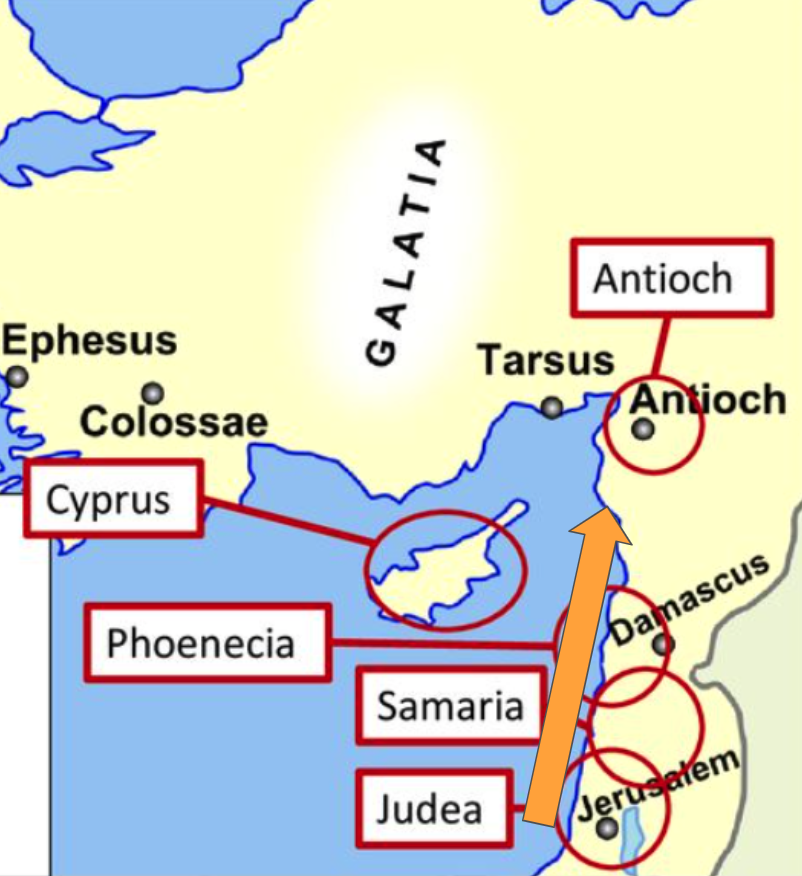
The commentary in the Restored New Testament notes that the title “acts of the apostles” can obscure the humble and precarious reality of the Jesus-following community at that time. They were people on the margins, who were persecuted, and who at great risk to themselves were sharing the anti-imperial message of God’s expansive love through the movement that Jesus ignited. Some of these people had criminal records, having been arrested and jailed for their subversive activity. As chapter 15 of Acts begins, Paul and Barnabas have just returned to Antioch from their travels on the northern coast of the Mediterranean Sea.
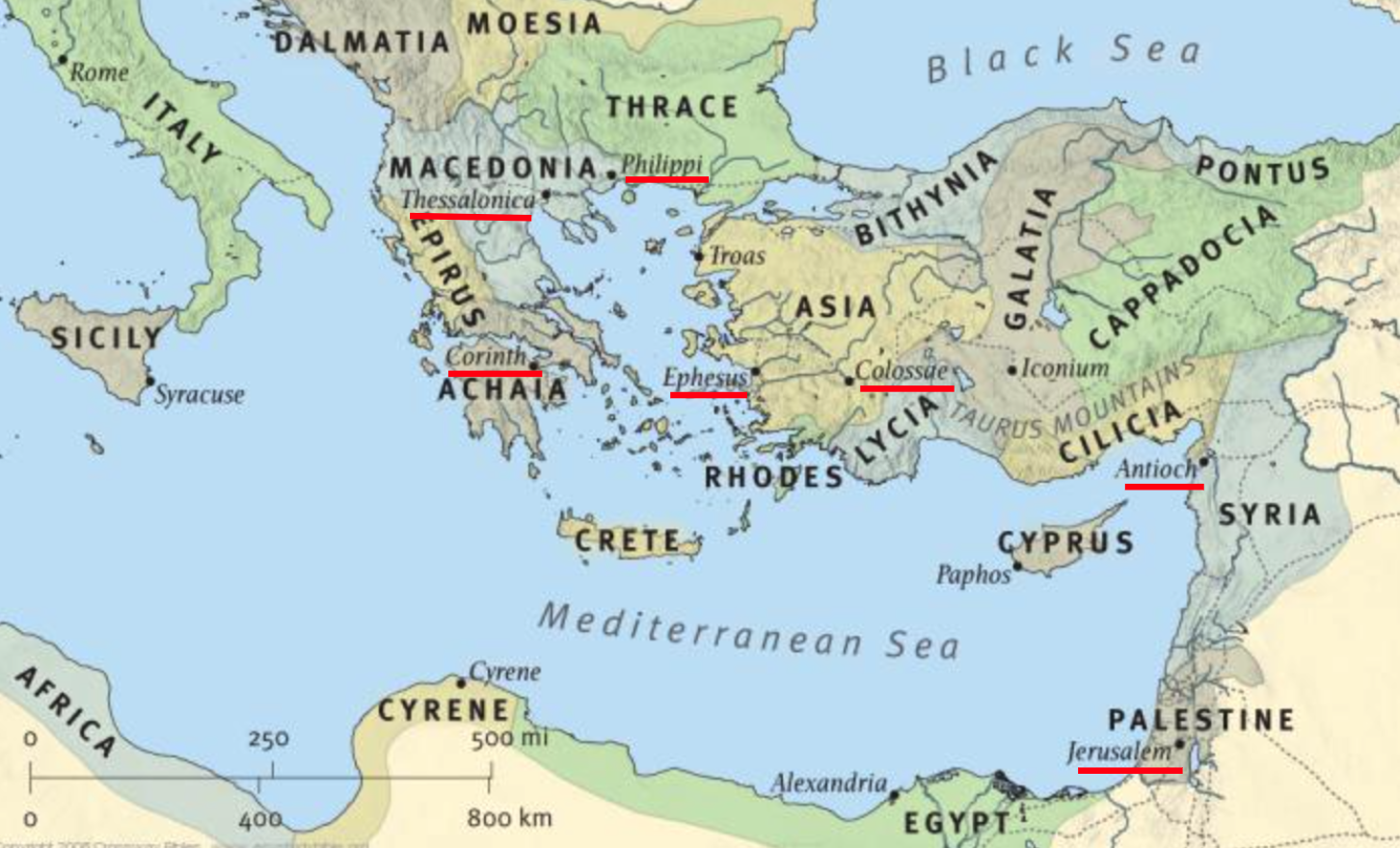
With that context, Eric will read the first four verses while I share a couple maps, showing the movements of these scrappy messengers.
Then certain individuals came down from Judea [to Antioch] and were teaching the brothers,
“Unless you are circumcised according to the custom of Moses, you cannot be saved.” And after Paul and Barnabas had no small dissension and debate with them, Paul and Barnabas and some of the others were appointed to go up to Jerusalem to discuss this question with the apostles and the elders.
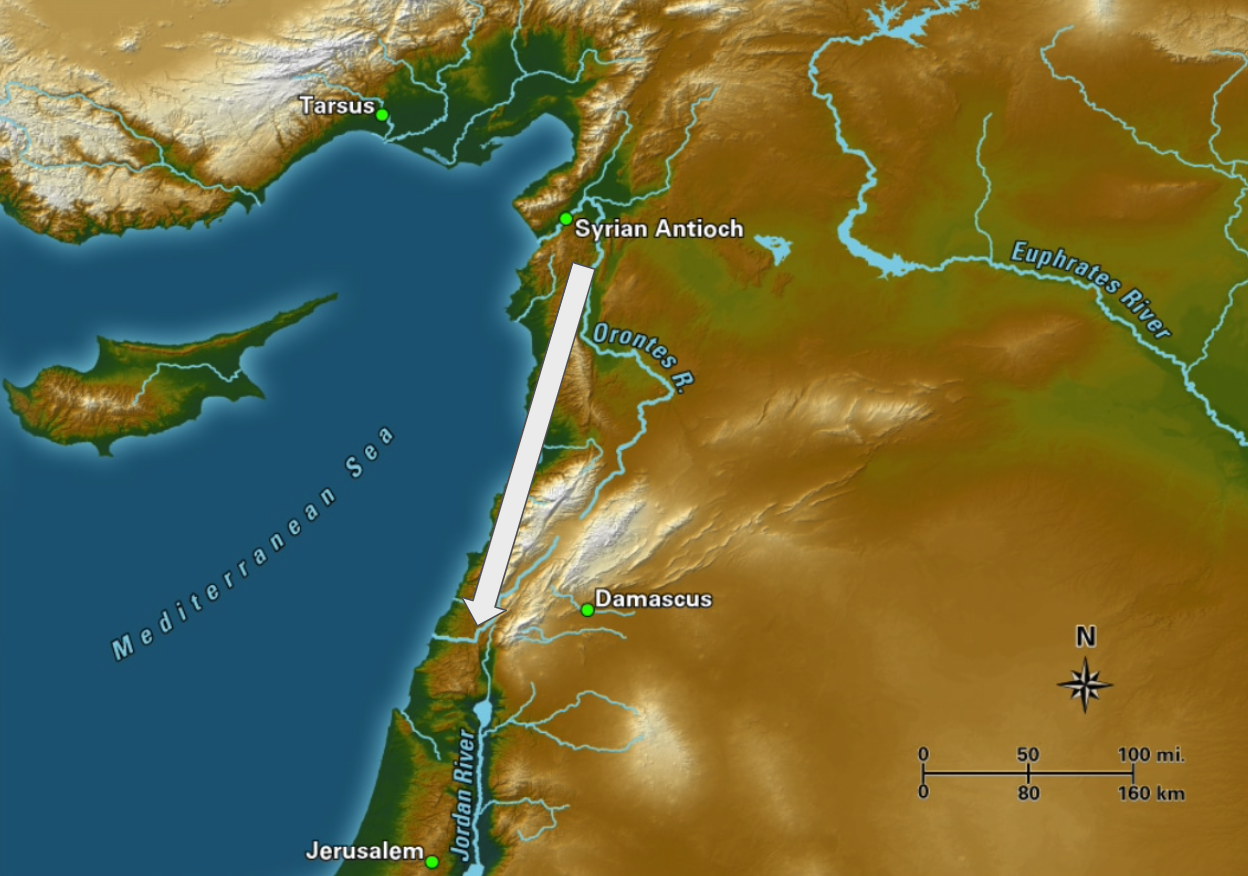
So they were sent on their way by the church, and as they passed through both Phoenicia and Samaria, they reported the conversion of the gentiles and brought great joy to all the brothers and sisters.
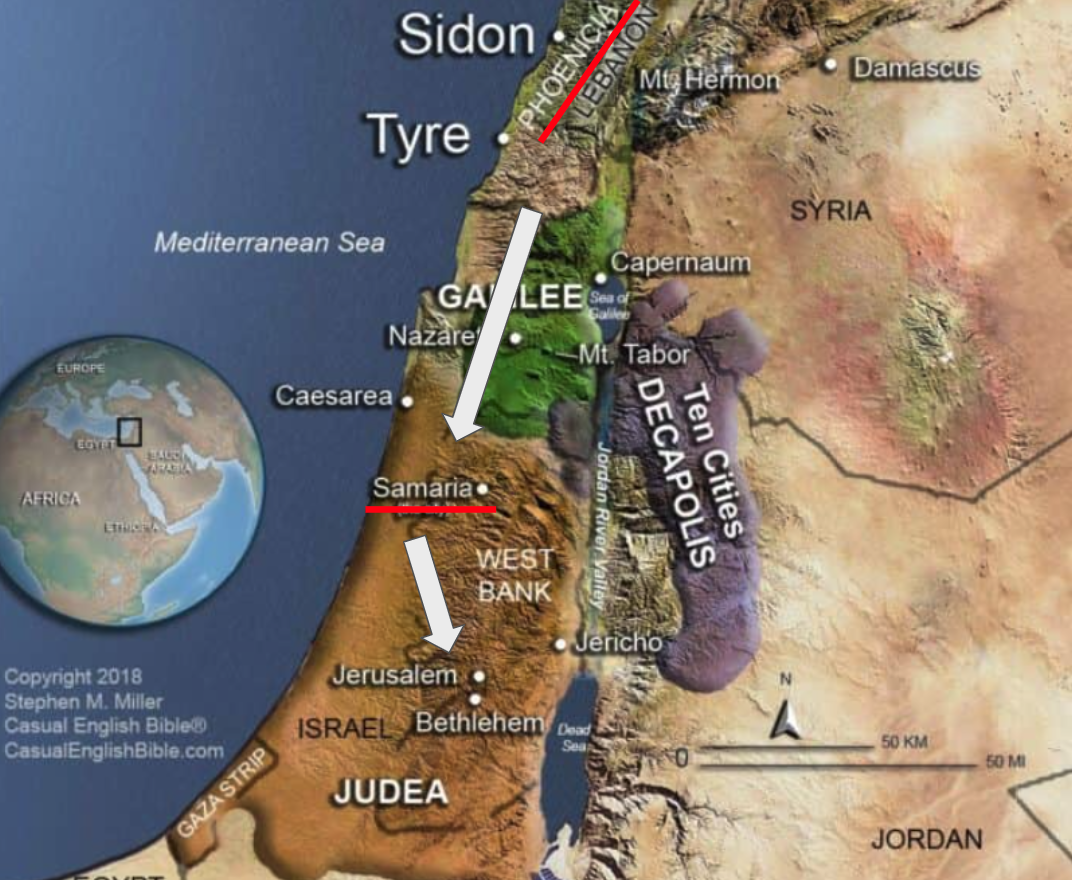
When they came to Jerusalem, they were welcomed by the church and the apostles and the elders, and they reported all that God had done with them.
Then the debate ensued:
But some believers who belonged to the sect of the Pharisees stood up and said, “It is necessary for them [the gentiles] to be circumcised and ordered to keep the law of Moses.”
The apostles and the elders met together to consider this matter. After there had been much debate, Peter stood up and said to them, “My brothers, you know that in the early days God made a choice among you, that I should be the one through whom the gentiles would hear the message of the good news and become believers. And God, who knows the human heart, testified to them by giving them the Holy Spirit, just as he did to us, and in cleansing their hearts by faith he has made no distinction between them and us… we believe that we will be saved through the grace of the Lord Jesus, just as they will.”
At this point Barnabus and Paul give testimony from their recent travels:
The whole assembly kept silent and listened to Barnabas and Paul as they told of all the signs and wonders that God had done through them among the gentiles. After they finished speaking, James replied, “My brothers, listen to me. Simeon has related how God first looked favorably on the gentiles, to take from among them a people for his name. This agrees with the words of the prophets, as it is written,
‘After this I will return,
and I will rebuild the dwelling of David, which has fallen;
from its ruins I will rebuild it,
and I will set it up,
so that all other peoples may seek the Lord—
even all the gentiles over whom my name has been called.
Thus says the Lord, who has been making these things known from long ago.’
This story concludes with the decision that gentiles do not need to be circumcised to be a part of the community following Jesus. This was a huge shift, allowing for the full inclusion of people who were not Jewish into the movement.
There are a few things I want to highlight about this story. First, it shows the followers of Jesus honestly wrestling with tensions they are experiencing as an expanding community. In looking at the geography, we understand that this movement had spread far beyond its origins in the land of Palestine. It is a multicultural movement seeking to define what unifies the diverse community of faith. This map helps us get a sense of the great spread of the movement.
Second, the decision to be inclusive rather than exclusive, traces a direct line to the original instructions given to Abraham and Sarah, to be a blessing to all the families of the earth. The Jewish people in the Jesus movement were recognizing the presence of God’s Spirit beyond the bounds of their religious tradition. And I would argue that the gentiles – meaning non-Jews – who were followers of Jesus were not seeking to create another religion apart from Judaism. From my understanding of scripture, what has become known as Christianity, was originally a movement transgressing the bounds of religion as we think about it today.
If this makes you wonder what to do with the Christian concept of salvation which comes up in the passage, I want to recall the sermon I preached last month. Rather than salvation coming through belief in the death and resurrection of Jesus, salvation (which means returning to right relationship) comes as we heed the words of the prophets through the ages, acting in solidarity with and as marginalized people, and divesting from systems of oppression, all known as sin.
Contrary to what Christian supremacy has claimed, these early followers of Jesus were preaching an anti-imperial gospel and were largely on the margins. They were people made poor and driven from their land by the Roman empire.
Their decision to be inclusive in Acts 15 flew in the face of the empire’s age-old strategy to divide and conquer colonized people or demand unity through conformity. As dispossessed people in the empire, they were claiming unity across difference and liberation from fear and death as they followed in the way of Jesus. His execution by Rome did not stop the power of his liberating message, but instead made it spread like wildfire.
Through this biblical lens, we can cleary see the despicable lies of Christian nationalism and Christian Zionism in our world today. Christian nationalism is centered on exclusion and a Christian identity tied to the nation state. It demands conformity to a white supremacist, sexist, and heteronormative standard. How incredibly counter that message is to the original instruction to be a blessing to all the families of the earth. Christian Zionism centers on the exclusion and total dehumanization of Palestinian people – whether they are Christian or Muslim – seeking their expulsion by any means necessary from Palestinian ancestral lands.
Recently I was honored to interview Noura Erakat, a Palestinian American legal scholar, for the Mennonite Action podcast, Front Light. The episode will be released in a couple days. We talked about how it is only possible for the people of Gaza to be forcibly starved (4 months of food are waiting at the border), every single one of their hospitals bombed, 232 journalists assassinated, and over 17,500 children killed by the Israeli army – all of this is only possible – if Palestinians are considered “other,” not fully human, and worthy of exclusion. I want to sit with 17,500 children killed for a moment. This does not include all the children who have been maimed, orphaned, and face acute malnutrition and starvation. This barbarism, Noura said, is a rehearsal of what can happen to any group of people deemed other or less than human.
We have seen this throughout history with the genocide of Indigenous people on these lands, of African people during the slave trade, of Jewish people, of Rwandan people, of Armenian people, and now the genocide of Palestinians.
We also see this lethal “othering” as Venezuelan men are sent to the mega prison in El Salvador, non-white people are cruelly deported for not having certain documentation, while others are incarcerated for speaking out against the genocidal policies of this country.
I want to take a breath here. And then I want to remind us that death and violence do not get the last word. As followers of Jesus – Rabbi Yeshua – who was executed by the Roman empire, we know that the tomb could not hold him or his movement. We are alive in this moment to witness to the way of life and liberation. We are standing with each other and our neighbors (here and around the world) to proclaim that God’s love knows no borders and that all people are created in the image of God.
This story in scripture reminds us that our commitment to inclusion as followers of Jesus is subversive, life-saving work. We must speak and act and take all the risks we can to protect those who are being violently excluded, calling out the lies of Christian nationalism and Christian zionism. In my lifetime the stakes have never been higher for us to boldly embody the inclusive way of Jesus.
At the end of our interview, Noura said something that really stuck with me. She said that she is willing to die for Palestinian liberation, but that she is not willing to kill herself for it. She said we have to celebrate every victory and be fully alive or else we’re letting the power of death win. She specifically encouraged Mennonites as people of God, to let love live and lead us and give us the courage we need in these times.
May we, the beloved community of First Mennonite Church of San Francisco, heed the original instruction in our sacred story and the prophets call throughout history to be a blessing to all the families of the earth. May we walk the path of salvation, claiming the power of life over death. And may we do this as a people of expansive inclusion, deep love, and profound courage through the strength of God within and among us. Amen and may it be so.