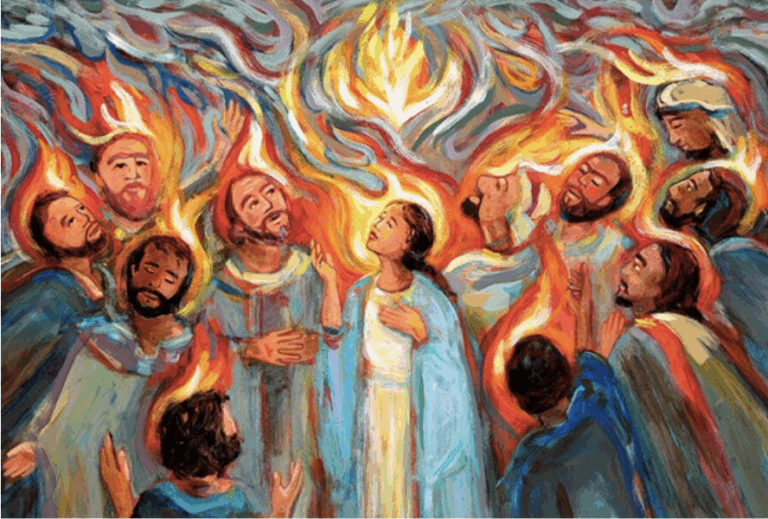
Epiphany Sermon: We are the Wise People
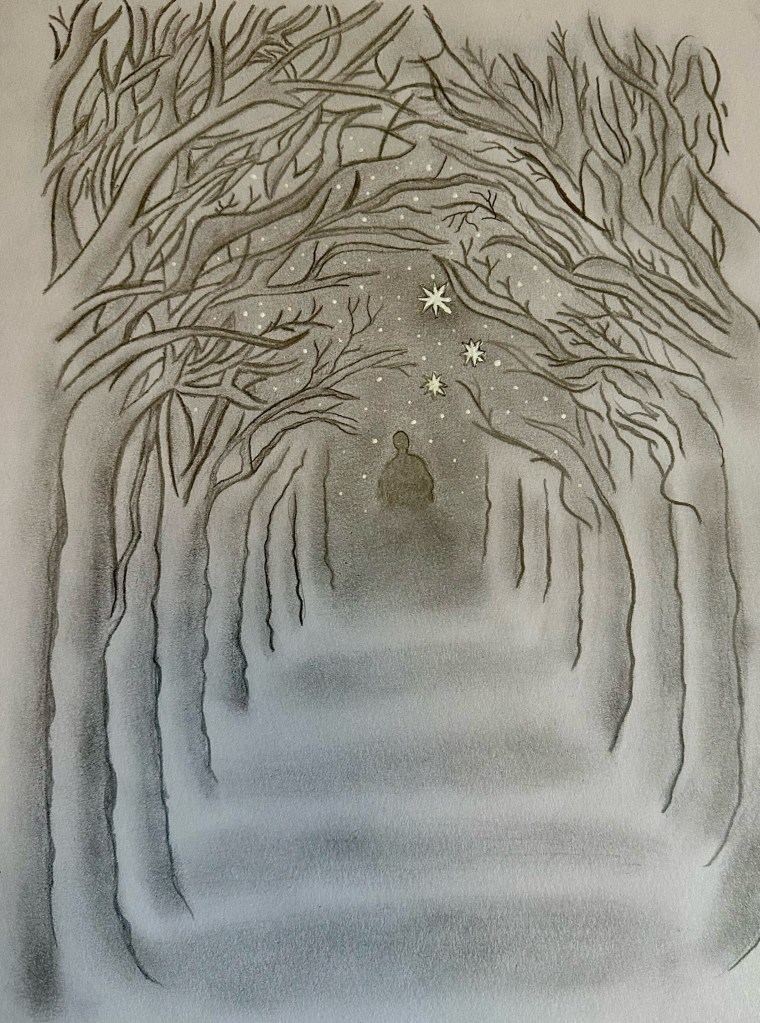
Matthew 2:1-12
An audio of the sermon can be found here. (Music and a children’s story come before the sermon.)
Happy new year! Or is it — not happy, but new? I think many of you are familiar with the fact that different cultures and religions keep time differently. For instance, if we’re following the Jewish calendar, we’re about three months into year 5784. Chinese new year, the year of the Dragon, is still about four weeks away.
The Christian church has its own calendar, its own way of keeping time. Every year begins with Advent, with the anticipation of the Divine Child coming into the world. Then comes the Christmas season, which most of us know — because of that terrible song — is 12 days long. The Christmas season ends with the celebration of Epiphany, which transitions us to what is called ordinary time. In other words, our normal, everyday life, when we get back to our usual routines, to work, to school.
So here we are, on the cusp between the the close of one year and the opening of another, on the cusp between the holidays — which, remember, means, holy days — and ordinary days. Every year at this time, we we sit on this cusp, the Christian calendar asks us to remember and tell the same story, the story of the visit of the Magi to the Divine Child. There’s very few stories that the Christian calendar asks us revisit every year — this is one of them.
There are so many ways to interpret this story. There’s the Christmas pageant way, with three kids wearing crowns dressed in bathrobes bringing jewelry boxes full of treasures to Jesus. In truth, the Magi weren’t kings and nowhere in Scripture does it say there were three of them but it still makes for a fun, child-friendly way to bring this story alive. Then there’s the historical scholarly approach, which seeks to understand who authored this text and why, who was the intended audience, and what did this text mean to them. When I’ve preached on this text in the past, I have often taken this approach.
And then, there’s the metaphorical or mythical way to take in the truth of this passage. In our scientific age, we often read Bible stories as telling historical truth and then we dismiss them when they obviously aren’t factually true. Biblical fundamentalism is actually only possible within this kind of scientific worldview — it doubles down on how the Bible is telling literal, historical truth. Because we see these stories as, basically, “eyewitness” accounts, every year, about this time, you’ll get people trying to figure out what astrological phenomenon might explain the star of Bethlehem. Was it a comet, a supernova, a meteor? (The answer to all of these questions is no.)
But for centuries before our scientific age, people were more concerned with what a Bible story meant. How did it explain their human experience to them? How did it make meaning out of that experience? In other words, how was the story symbolically or mythically true? As the writer Karen Armstrong says, “A myth is an event which, in some sense, has happened once, but which is also happening all the time.” (From A Short History of Myth.) A myth is a story we tell over and over because we want to remind ourselves that it is happening all the time, that it may be happening… now.
How might the story of the Magi be happening now, in our individual and collective lives?
We need to start with the Divine Chid because it is at the living symbol or archetype at the heart of the Christmas story and thus at the heart of Christianity. The Divine Child, Brian Collinson writes, is a being, “apparently so vulnerable and so weak, who survives against all odds… Despite (a) harsh and unwelcoming environment, the hostility of the powers that be… the child survives and even flourishes.” That child often goes on to save or liberate their people.
Within Judaism, Moses and Joseph fit this archetype of the Divine Child, even though they are not seen as “divine” within Jewish tradition in the same way that Jesus is traditionally seen as such within Christianity. In fact, the motif of the Divine Child is a common one in many traditions from around the world. To me, the fact that the Divine Child shows up in many traditions doesn’t make Christianity less true — it makes it more true, more meaningful. It means our tradition is tapping into a deep reservoir of symbolic meaning that humans across time and geography have found illuminating in helping them make sense of their lives.
What does the Divine Child mean for us? The Divine Child is that which “appears within (our awareness), perhaps at the moment when we are nearly ready to despair.” It appears “when we least expect it, as the new possibility or potentiality that appears so weak, so powerless, that it seems that there can be no possible way for it to survive agains the overwhelming odds arrayed against it….And (yet), against all the dictates of rationality, if we are attentive to (this Divine Child), if we are prepared to open ourselves to its reality, its reality (gradually) becomes our reality: a new of living that emerges from the ashes of the old.”
How does this relate to you? Is there some new possibility or potentiality in you that seems weak, powerless, like a baby that has just been born and that yet may, at the same time, be surprisingly strong and resilient? Where in your life are you experiencing despair? Could it be that that despair, oddly, is the holding place — the manger if you will — where the Divine Newness will appear?
Is there some new possibility or potentiality you sense in the world that seems weak, powerless, like a baby that has just been born and that yet may, at the same time, be surprisingly strong and resilient? Where in our communal lives are we experiencing despair? Could it be that that despair, oddly, is the holding place — the manger if you will — where the Divine Newness will appear?
In our story, the wise people are the ones who recognize that the Divine Newness has come into the world, and they drop everything to attend to it, to seek it out. Not to kill this new potentiality, as Herod wants to do, nor to possess it but to pay homage to it. We pay homage to something or someone to which we have pledged our allegiance. The wise people wish to declare their allegiance to this Divine child, to this new potentiality. And so when they find this Divine Child, they open their treasure chests and offer their most precious gifts.
The wise people are showing us how to respond to the Divine Newness when it appears in our lives. Drop everything, figuratively. Attend to it. Prioritize the search for it, the finding of it. Offer it your most precious gifts — the gold of your attention, the frankincense and myrrh of your time and resources.
The wise people travel together, and together discern where the star is leading them to this Divine Child. Let’s keep in mind that to ancient people, stars were seen as “sentient beings, or the souls of the righteous, or angels,” according to Jewish scholar Amy-Jill Levine (from Light of the World: A Beginner’s Guide to Advent.) The star was thus a spiritual messenger, a spiritual guide. Just like the wise people, we, too, are invited to journey together through our individual and communal times of darkness, following what guides us, that pinprick of light in a night sky that seems to be moving,
When the wise people find the Divine Child, they experience overwhelming joy. Here is the fruit born of attentiveness to the birth of the Divine Newness within and among us: joy. Joy is different than happiness, deeper. In fact, one wise person told me that joy is possible even if you are unhappy. I’m still thinking on that koan.
Let’s be clear, this is not joy that exists because, in the outside world, it’s all good. King Herod is still plotting to kill Jesus in our story. The wise people have to continue to listen to divine guidance — this time in the form of a dream —to subvert Herod’s violent plot. And, tragically, right after this story, King Herod — realizing he had been tricked by the Magi — orders the killing all the baby boys under two years old in and around Bethlehem. The story, which follows the one of the Magi, is referred to as the “slaughter of the innocents.” We know this world, where innocents are killed. It is delivered to us on our news feeds every day.
It is into this world that the Divine Newness appears. It is in this world that we are asked to be attentive to its arrival and to seek it out, to be aware of the forces arrayed it against it — whether those forces come from within our own psyche or from within halls of power — to nurture it, protect it, help it grow until its reality becomes becomes our reality: a new of living that emerges from the ashes of the old.
This is holy work. And it is the work we do in the midst of our ordinary lives. As we go to school, as we go to work, as we tend our homes and friends and families, as we protest or write letters or do whatever it is we do to make our voice heard, as we get up and do it again, we are the wise ones. We are star watchers. We are tenacious followers of the Light, willing to travel far and had until we arrive at the place of the Divine Newness again and again and again. (Singing) “We are wonders, blessed wonders, singing joy to the world.”